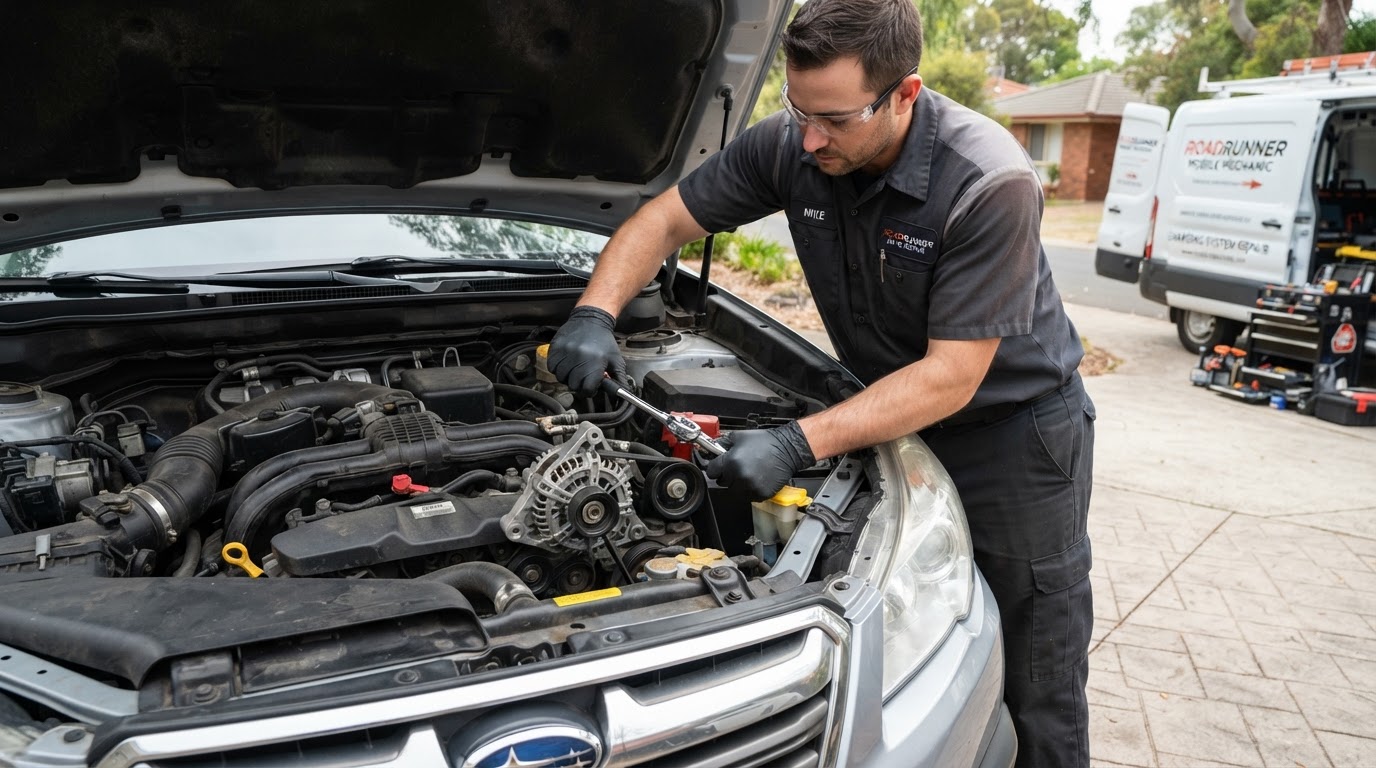
If your battery keeps dying or the charging light is on, you may need an alternator. Our mobile alternator replacement in Bloomington, Indiana diagnoses and replaces your alternator on-site so you're not stuck jumping your car every morning.
The alternator charges the battery while you drive and powers your vehicle's electrical systems. When it fails, the battery takes over and quickly drains — which is why a bad alternator looks like a bad battery. We measure alternator output voltage and ripple, test the voltage regulator, and inspect belt tension before recommending replacement, so we fix the real cause.
What an Alternator Does
The alternator is your vehicle's onboard generator. Once the engine is running, it converts mechanical energy into electrical current — recharging the battery and powering the lights, ignition, fuel pump, fans, infotainment, and every other electrical load. Without it, the battery carries the entire electrical load and drains within minutes to an hour.
When the alternator fails, the vehicle runs on battery power alone until the battery is depleted — then the engine dies and won't restart. That's why a failing alternator often looks like a bad battery: the battery dies, but the cause is upstream.
Signs of a Failing Alternator
An alternator usually gives warning before it fails completely. Watch for these symptoms:
- Battery or charging warning light on while driving
- Battery that dies shortly after a jump-start
- Headlights that dim at idle and brighten with rpm
- Burning rubber smell near the alternator (slipping belt or seized bearing)
- Accessories — radio, wipers, blower — losing power at low rpm
- A whining or grinding noise from the alternator area
- You replaced the battery and the problem came back
Alternator vs. Battery: Getting It Right
The most expensive mistake is replacing the battery when the alternator is the problem — the new battery will soon be dead too. If a freshly charged battery drains while driving or shortly after, the alternator likely isn't charging. If the battery tests weak under load but charging voltage is normal, the battery is the problem.
We measure alternator output voltage and ripple with the engine running, test the voltage regulator, and inspect belt tension before recommending any replacement. We confirm the alternator is the actual cause — not the battery, belt, or a connection — so you fix it once.
What Affects Alternator Replacement
Several factors determine the scope and cost of an alternator replacement:
- Alternator amperage rating — higher-output units cost more
- New vs. remanufactured unit — both are viable; we advise per vehicle
- Whether the drive belt or tensioner also needs replacement
- Alternator accessibility — some engines bury the alternator under other components
- Whether the voltage regulator is internal or external to the alternator
Should the Belt Be Replaced Too?
The serpentine belt drives the alternator, and a worn or glazed belt can slip and cause undercharging even with a good alternator. When we replace an alternator, we measure belt tension and inspect for cracking or glazing.
If the belt or tensioner is worn, replacing it at the same time prevents a return visit and protects your new alternator. We show you the condition and recommend accordingly — we don't replace parts that are still serviceable.
Can the Alternator Be Replaced at My Location?
Most alternators are accessible and replaced on-site in your driveway or parking spot. The alternator, belt, and tensioner are typically reachable through the engine bay with the tools we bring.
A small number of vehicles with tight packaging — where the alternator is buried under other components or requires significant disassembly — may need a shop referral. We assess access when you call and advise honestly before starting, so there are no surprises.
What to Have Ready When You Call
To help us arrive prepared, please have:
- Your vehicle year, make, and model
- The symptoms — battery light, dim lights, dead battery, smell, noise
- Whether the battery has been replaced recently
- Whether you've needed jumps and how often
- Where the vehicle is parked in the Bloomington area
How Long Does Alternator Replacement Take?
Alternator replacement typically takes 1 to 2 hours depending on access. On most vehicles the alternator is reachable through the engine bay and the job is straightforward — remove the belt, disconnect the wiring, unbolt the old unit, install the new one, route and tension the belt, and verify charging output. On engines where the alternator is buried under other components, the job takes longer because of the access work involved.
We give you a realistic time estimate before we begin. If the correct alternator is available and you approve the work, we complete the replacement on the same visit — and you drive away with a charging system that works, verified by a post-install voltage test.
What Alternator Replacement Costs
Pricing varies with the alternator's amperage rating for your vehicle, whether you choose a new or quality remanufactured unit, whether the belt or tensioner also needs replacement, and how accessible the alternator is on your engine. A higher-output alternator for a vehicle with heavy electrical loads costs more than a standard unit.
We test first to confirm the alternator is the actual cause, then give you a written estimate covering the alternator, any belt or tensioner work needed, and the labor. You approve the estimate before any work begins — no surprise charges and no unnecessary upsells.
New vs. Remanufactured Alternators
Both new and quality remanufactured alternators are viable options, and we advise based on your vehicle, budget, and the unit's warranty. A new alternator has all-new internal components and often carries a longer warranty. A quality remanufactured unit has been rebuilt with new bearings, brushes, and regulators and tested to spec — it's a cost-effective option for many vehicles.
We don't recommend the cheapest available unit, regardless of new or reman — alternator quality varies widely, and a poorly rebuilt unit fails prematurely. We source from reputable suppliers and stand behind the parts we install. We'll explain the options and our recommendation for your specific vehicle when we give you the estimate.
Warning Signs You Shouldn't Ignore
A failing alternator gives warning before it leaves you stranded, but the window can be short. If the battery light comes on while driving, headlights dim at idle, or you smell burning rubber near the alternator, don't wait — the vehicle is running on battery power alone and will stop once the battery drains. That could be 20 minutes or it could be an hour, depending on the electrical load and battery condition.
If you're far from home when the battery light comes on, reduce electrical load — turn off the AC, radio, and non-essential accessories — and head toward a safe location or call for mobile service. Continuing to drive with a dead alternator risks a stall in traffic and a no-start that may require a tow. Calling early often means we can replace the alternator at your location instead of towing a dead vehicle.
Seasonal Charging System Stress in Indiana
Indiana's seasons stress charging systems in different ways. In summer, air conditioning, cooling fans, and blower motors create high electrical loads that push the alternator hard — a marginal alternator that survived winter may fail under summer demand. In winter, cold engine oil creates higher cranking load, heated seats and rear defrost draw heavy current, and short trips don't allow the battery to fully recharge. Both seasons expose a weak alternator.
If your alternator is showing signs of weakness heading into a high-load season, proactive testing and replacement prevent a breakdown. We test alternator output and ripple at your location in Bloomington — a quick check that tells you whether the charging system is healthy or failing before it leaves you stranded.
Who Needs This Service?
Bloomington drivers whose battery light comes on while driving, whose battery dies shortly after a jump, whose headlights dim at idle, who smell burning rubber near the alternator, or whose accessories lose power at low rpm. If you've replaced a battery and the problem came back, the alternator may be the real cause.
Common Symptoms
If you're noticing any of these, it's time to call.
- Battery light on while driving
- Battery dies shortly after a jump
- Headlights dim at idle
- Burning rubber smell near the alternator
- Accessories lose power at low rpm
What We Do
Our mobile mechanic handles this on-site in Bloomington.
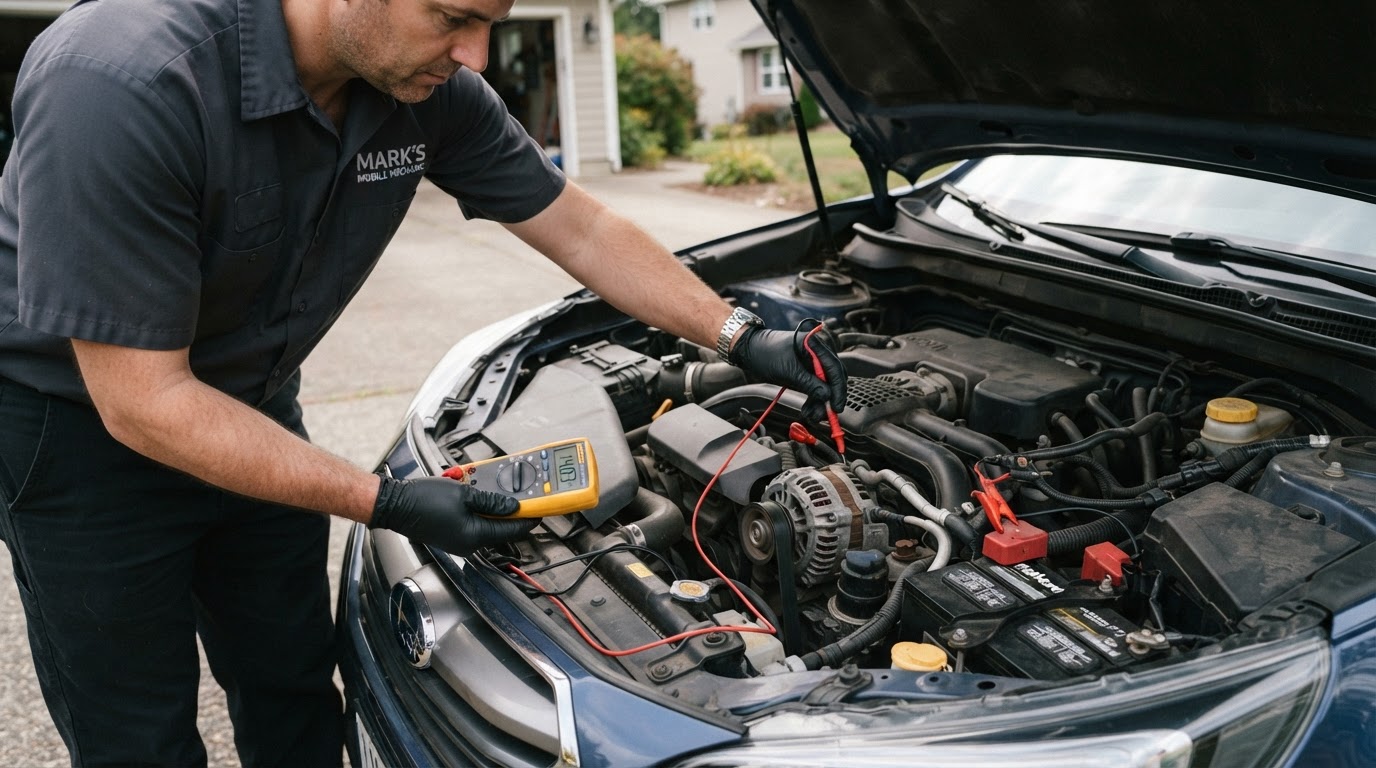
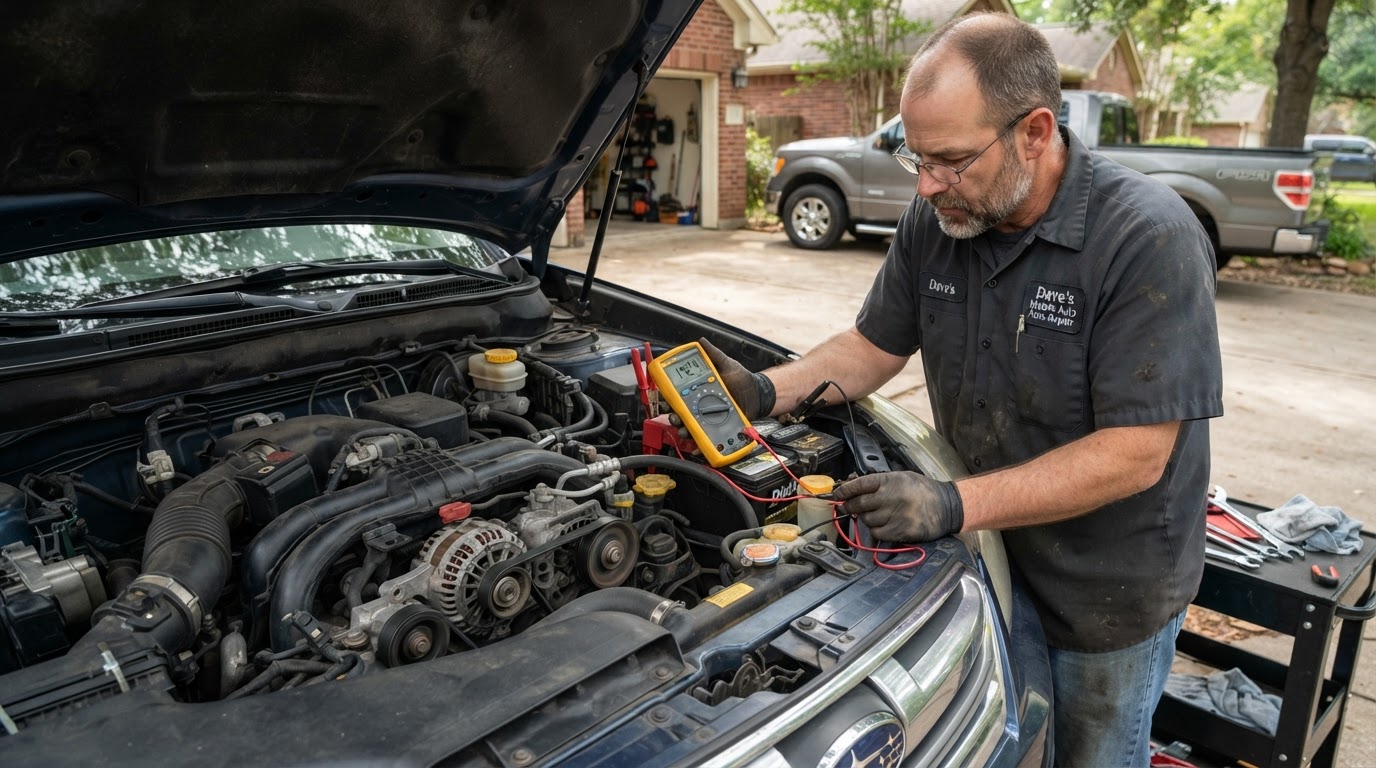
- Test alternator output and voltage regulator
- Inspect belt tension and pulley alignment
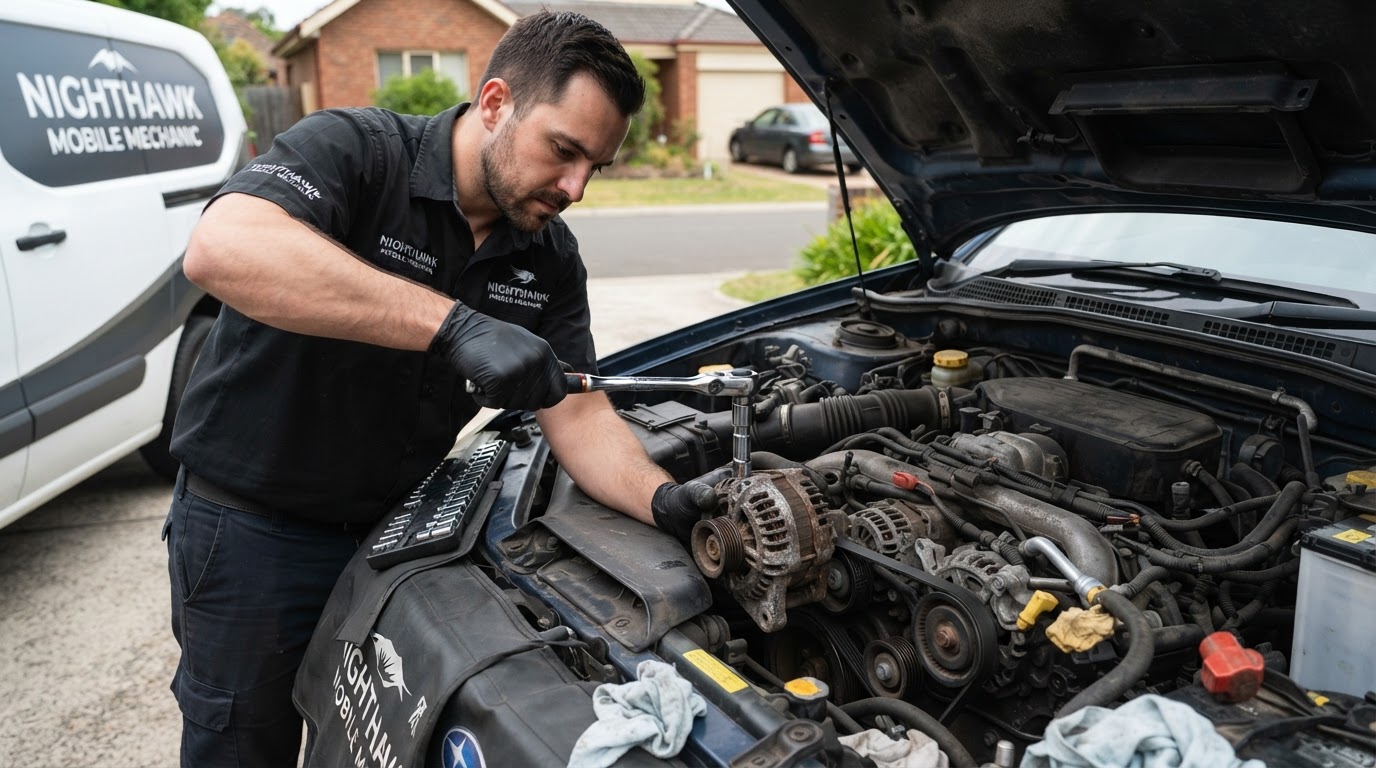
- Replace alternator with a quality unit
- Re-test the full charging system after install
Mobile Alternator Replacement — On-Site in Bloomington
Real mobile service, performed where your vehicle sits.
How the Service Works
A clear, step-by-step process from arrival to a verified fix.
- 1
Test Charging Output
We measure alternator voltage and ripple with the engine running, test the regulator, and inspect belt tension to confirm the alternator is the actual cause.
- 2
Replace the Alternator
We install a quality replacement or reman unit, route and tension the belt correctly, and reconnect the charging circuit.
- 3
Re-Test the System
We verify charging voltage and confirm the battery is now being charged properly — and check for any belt noise before you drive.
Pricing Factors
Cost varies based on your vehicle and the specifics of the job. You approve a clear estimate before any work begins.
- Alternator amperage rating for your vehicle
- New vs. remanufactured unit
- Whether the belt or tensioner also needs replacement
- Alternator accessibility on your specific engine
Mobile Service Suitability
Most alternators are accessible and replaced on-site in your driveway or parking spot. A small number of vehicles with tight packaging or alternators buried under other components may need a shop referral — we'll advise you honestly before starting so there are no surprises.
Mobile Alternator Replacement — FAQs
How do I know it's the alternator and not the battery?
If a freshly charged battery drains while driving, the alternator isn't charging. We test both before recommending any replacement.
Can you replace it in my driveway?
Yes — most alternators are accessible and replaced on-site. Some vehicles with tight packaging may need a shop referral.
Should I replace the belt too?
We measure belt tension and inspect for cracking or glazing. If the belt or tensioner is worn, replacing it with the alternator prevents a return visit.
How long does alternator replacement take?
Typically 1-2 hours depending on access. We give you an honest time estimate up front.
I just replaced my battery and it died again. Why?
That's a strong sign the alternator isn't charging. A new battery can't stay charged if the alternator isn't replenishing it — we test the charging system to confirm.
Is a remanufactured alternator okay?
A quality remanufactured unit is a viable option for many vehicles. We advise on new vs. reman based on your vehicle, budget, and the unit's warranty.