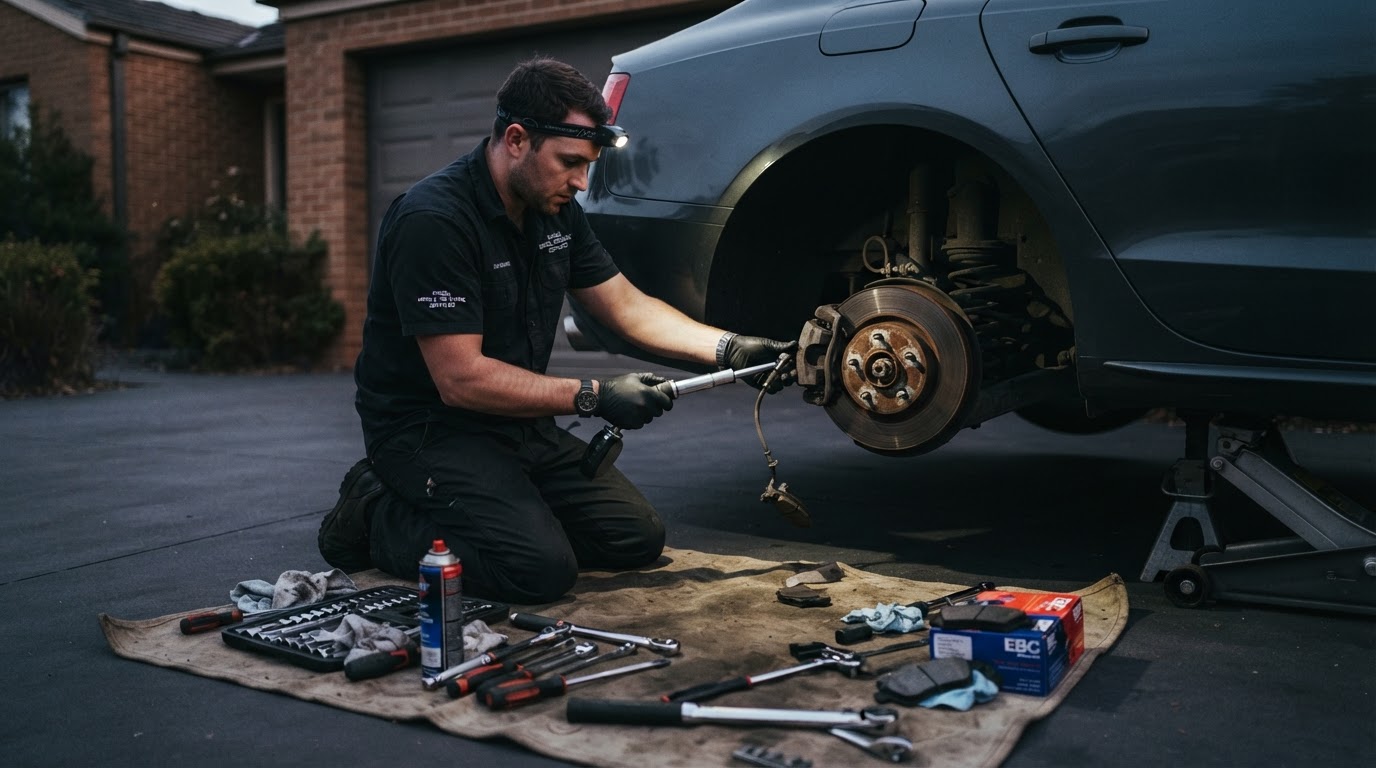
We measure pad and rotor thickness and show you the wear before any work.
Brake Inspections
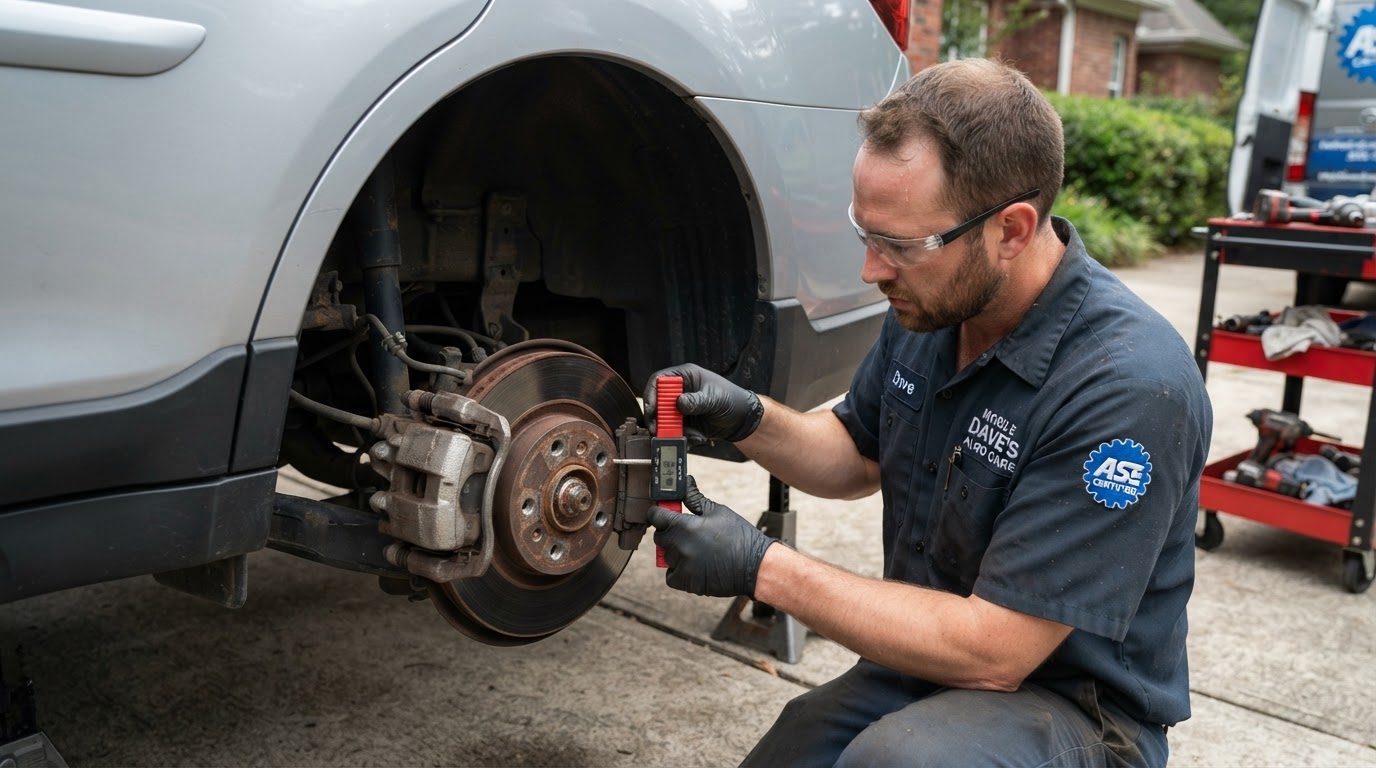
Every brake service starts with a real inspection. We measure pad thickness, check rotor condition and runout, inspect caliper slides and hardware, and assess brake fluid condition. We show you what we find so you understand what's worn, what's safe, and what needs attention now versus soon.
Brake Pads
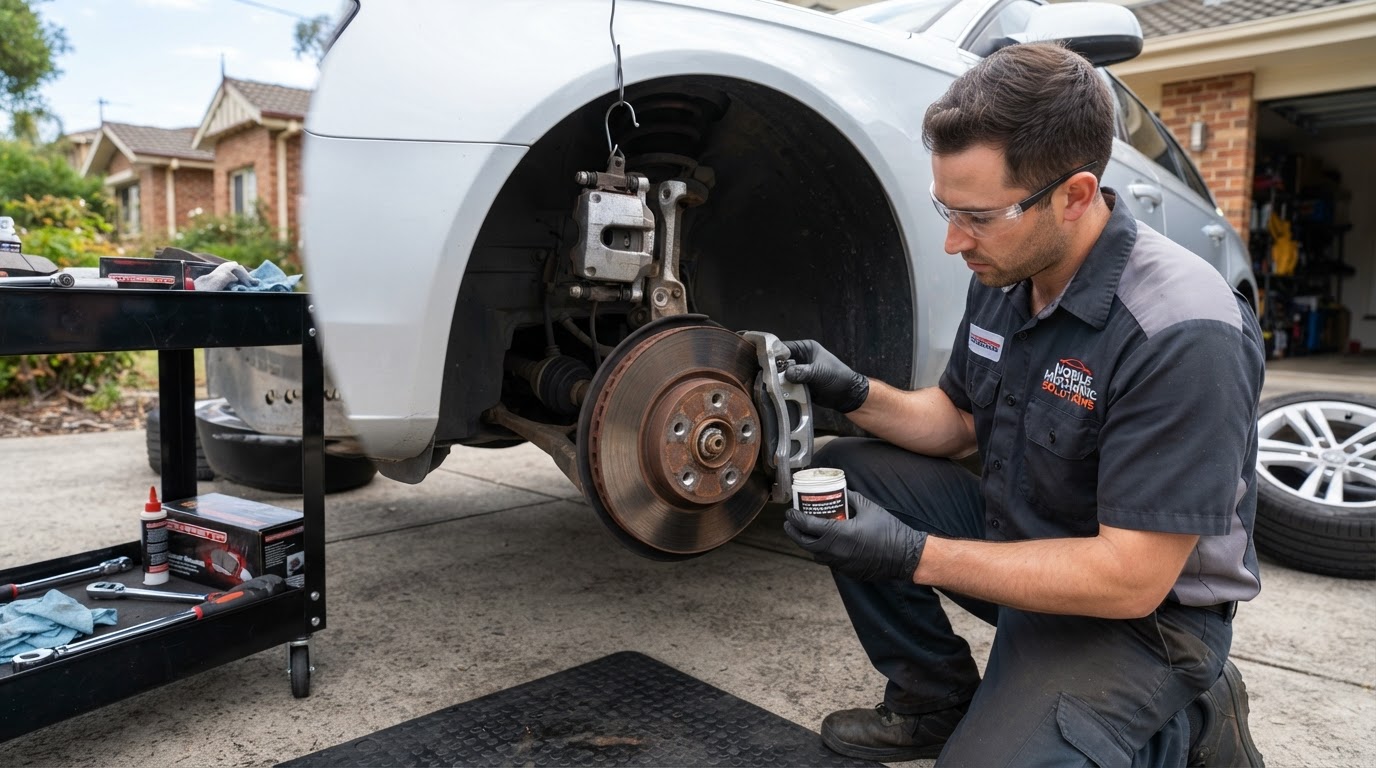
Pads create the friction that stops your vehicle. We replace worn pads with quality ceramic or semi-metallic sets matched to your driving and vehicle, lubricate caliper slides, service hardware, and bed in the new pads for quiet, confident stops.
Brake Rotors
Rotors provide the friction surface. Warped, grooved, or below-minimum-thickness rotors cause pedal pulsation, steering shimmy, and reduced braking performance. We measure thickness and runout, machine rotors in-spec when possible, or replace them with quality units when they're worn past safe limits.
Brake Noise: Squealing & Grinding
Squealing often indicates glazed or worn pads, a missing noise shim, or debris. Grinding is more serious — it usually means metal-on-metal contact where the pad friction material is gone and the backing plate is cutting into the rotor. Grinding should be addressed immediately before rotor damage and repair costs increase.
Vibration & Pulsation
A brake pedal that pulses up and down or a steering wheel that shakes under braking typically points to warped rotors or uneven rotor thickness. We measure lateral runout and thickness variation to confirm the cause and recommend machining or replacement.
Soft or Spongy Pedal
A pedal that feels soft, sinks, or travels too far before engaging can indicate air in the hydraulic system, contaminated or old brake fluid, a failing master cylinder, or a leak. We inspect the hydraulic system, check for leaks, and recommend the correct fix — which may include a brake fluid flush.
Brake Warning Lights
A brake warning light can signal low fluid, a parking brake engaged, a hydraulic pressure imbalance, or worn pad indicators. A red warning means stop driving and have it checked immediately; we diagnose the cause on-site and tell you whether it's safe to continue.
When Not to Drive
Don't drive if you hear grinding, the brake pedal goes to the floor, the red brake warning light is on, or the vehicle pulls hard under braking. These indicate a safety-critical failure. Pull over safely and call for mobile service or a tow.
Mobile Brake Repair Process
We arrive, inspect and measure, show you the wear, and give you an upfront quote. With your approval we lift the vehicle, replace pads and service or replace rotors, lubricate hardware, reassemble, torque wheels to spec, and verify pedal feel before you drive.
Cost Factors
Brake repair cost depends on the vehicle, axle (front, rear, or both), pad type, whether rotors can be machined or need replacement, and hardware condition. We give you a clear, itemized estimate before any work begins — no surprise charges.
Brake Pad Materials: Ceramic vs. Semi-Metallic
Brake pads come in different friction materials, and the right choice depends on your vehicle and driving. Ceramic pads run quieter, produce less dust, and are well-suited to daily driving and commuter vehicles around Bloomington. Semi-metallic pads handle higher heat and heavier loads, making them a better fit for trucks, SUVs, and vehicles that tow or see aggressive use. We match the pad type to your vehicle and driving style rather than installing a one-size-fits-all package — the wrong pad can cause noise, poor stopping, or premature wear.
When Rotors Need Replacement vs. Machining
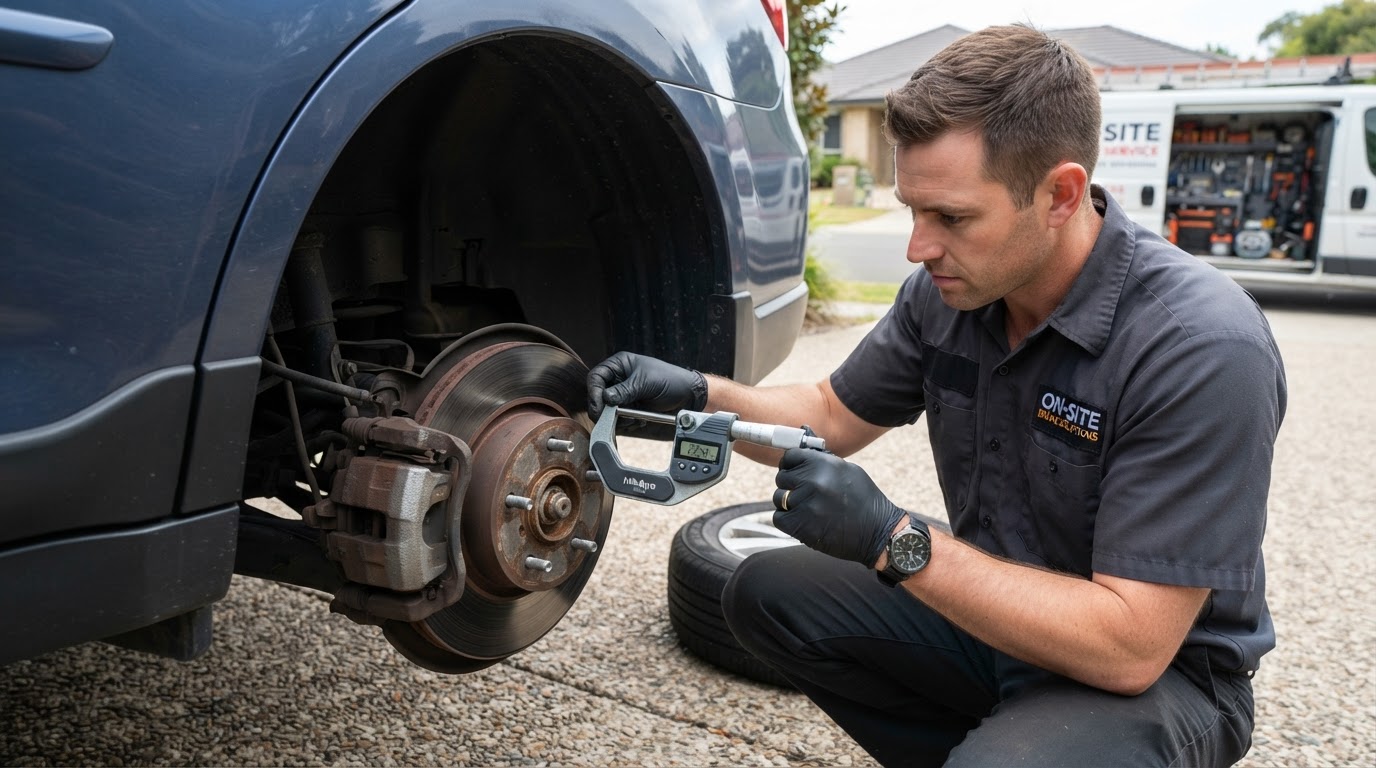
Rotors don't always need replacement. If a rotor is above the manufacturer's minimum thickness specification and has only minor scoring or runout, machining on a brake lathe can restore a flat, smooth surface at a lower cost. However, rotors that are worn below minimum thickness, deeply grooved, cracked, or severely warped must be replaced — machining a too-thin rotor is unsafe. We measure thickness and lateral runout with a micrometer and tell you honestly which option makes sense for your vehicle and budget. On-site, we replace rotors; machining requires a shop lathe, and we'll coordinate that when it's the better value.
Brake Fluid and Hydraulic Health
Brake fluid is hygroscopic — it absorbs moisture over time, which lowers its boiling point and causes internal corrosion in the brake system. Old or contaminated fluid contributes to a soft pedal, reduced stopping power under hard braking, and premature ABS component failure. We inspect fluid color, level, and condition during every brake service and recommend a brake fluid exchange when the fluid is dark, burnt, or beyond its service interval. This is one of the most overlooked maintenance items, and it directly affects brake performance and safety.
How Bloomington Driving Conditions Affect Brakes
Bloomington's driving mix — stop-and-go traffic around campus and downtown, steep hills on the south side, and higher-speed rural highways — creates varied brake wear. City driving wears pads faster due to frequent braking; highway driving builds more heat in the rotors. The hilly terrain around south Bloomington and Brown County puts extra demand on brakes during downhill descents. Indiana's winter road salt and moisture also accelerate caliper and hardware corrosion, which causes uneven pad wear and sticking calipers. We inspect for these local wear patterns and address hardware and caliper issues, not just the pads.
Brake Warning Lights and What They Mean
Your vehicle has two brake-related warning lights. A red BRAKE light means a serious problem — low brake fluid, a hydraulic pressure imbalance, or the parking brake is engaged. A red light means stop driving and have it checked immediately. An amber ABS light means the anti-lock brake system has detected a fault — the brakes still work, but ABS may not activate in a panic stop. An amber light is less urgent but still needs diagnosis. We scan the ABS module, check fluid level and condition, inspect for leaks, and tell you whether it's safe to drive or needs immediate attention.
Who Needs Brakes?
Bloomington drivers hearing squealing or grinding when braking, feeling a soft or sinking pedal, noticing a steering wheel that shakes under braking, seeing a brake warning light, or experiencing longer stopping distances. If it's been 30,000+ miles since your last brake service, an inspection can catch wear before it becomes a safety issue.
Benefits of Mobile Brakes
- We measure pad and rotor thickness and show you the wear before any work — no unnecessary upsells.
- No shop visit for most brake services — we bring the tools and parts to your home or office.
- Quality ceramic or semi-metallic pads matched to your vehicle and driving, not a one-size-fits-all package.
- Hardware service and caliper slide lubrication included, so your brakes stay quiet.
- A written, itemized estimate before any work begins — no surprise charges.
Mobile Brakes — On-Site in Bloomington
See how we bring this service to your vehicle.
What to Expect
- We arrive, inspect, and measure pad thickness, rotor thickness, and lateral runout.
- We show you the wear and explain what's needed now versus soon.
- We give you an upfront, itemized quote covering pads, rotors, and hardware.
- With your approval, we lift the vehicle, replace pads and service or replace rotors, lubricate hardware, and reassemble.
- We torque wheels to spec and verify pedal feel before you drive.
Choosing a Brakes Provider
- Choose a mechanic who measures pad and rotor thickness and shows you the wear before recommending anything.
- Look for someone who matches pad type — ceramic or semi-metallic — to your vehicle and driving.
- Confirm hardware service and caliper slide lubrication are included, not extra.
- Ask whether rotors can be machined or need replacement, and how that decision is made.
- Verify you get a written, itemized estimate before any work begins.
Questions to Ask Before Scheduling
- Will you measure the pads and rotors and show me the wear?
- Can the brake service be done at my home or workplace in Bloomington?
- What pad type do you recommend for my vehicle and why?
- Can my rotors be machined, or do they need replacement?
- What does the estimate include — pads, rotors, hardware, and labor?
- How long will the brake service take?
Brakes — FAQs
Can you replace brakes at my home or office in Bloomington?
Yes. We perform complete brake pad and rotor service at your location — inspection, replacement, hardware service, and a final pedal check. No shop visit required for most vehicles.
How do I know if I need pads, rotors, or both?
We measure pad thickness and rotor thickness and runout. If rotors are above minimum spec and not warped, machining or reuse is often possible. If they're worn past limits, replacement is the safe choice. We show you the measurements before recommending anything.
Is it safe to drive with squealing brakes?
Light squealing can be glazing or debris, but persistent squealing or any grinding means the brakes need attention soon. Grinding indicates metal-on-metal contact that will damage the rotors and increase repair cost — don't wait.
How long does mobile brake service take?
A single axle (front or rear) typically takes 1-2 hours. Both axles may take 2-3 hours depending on the vehicle. We give you a realistic time estimate up front.
Can you machine my rotors on-site?
We can't machine rotors on the road — that requires a lathe. We measure them and recommend honestly whether machining at a shop, reuse, or on-site replacement is the right call for your situation and budget.
Why does my brake pedal pulse?
A pulsing pedal usually means warped rotors or uneven rotor thickness. We measure lateral runout and thickness variation to confirm the cause and recommend machining or replacement.