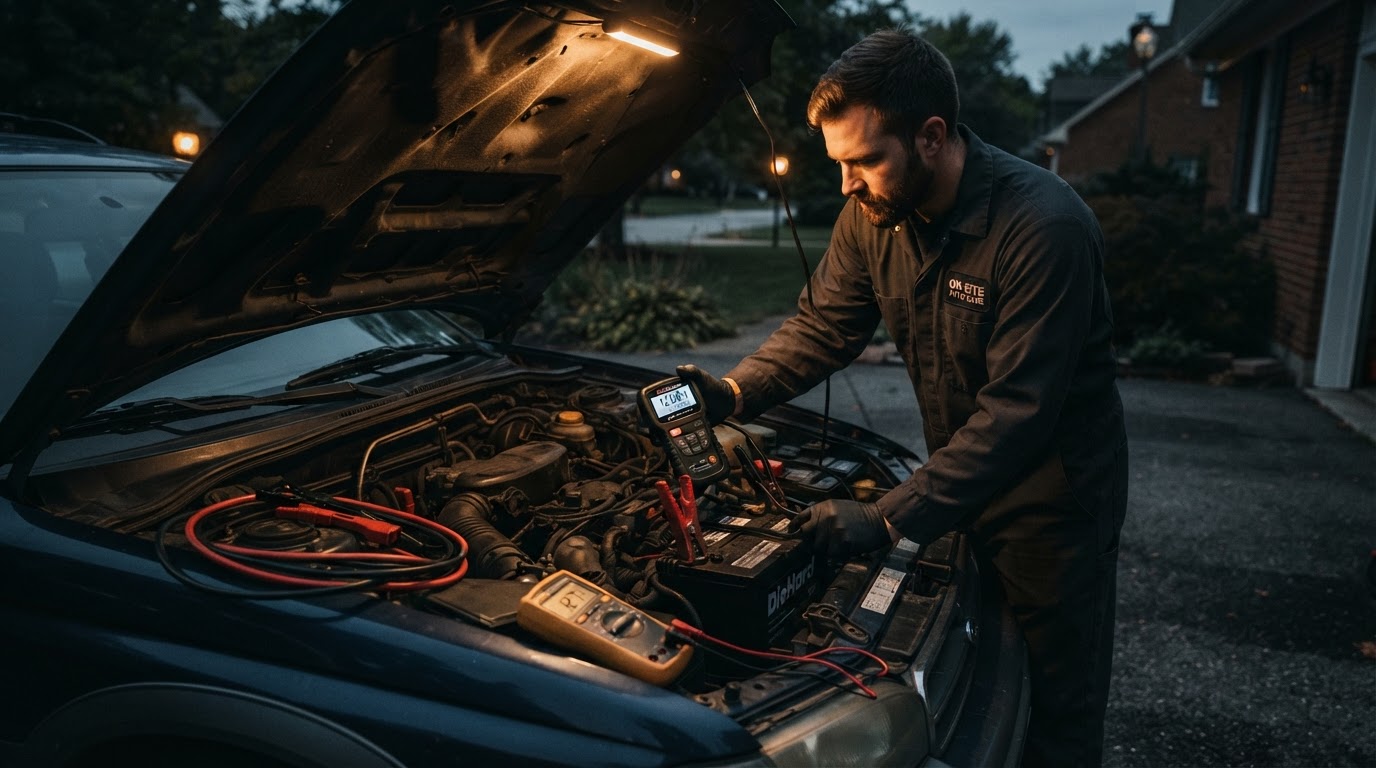
We test the whole charging and starting system before recommending any replacement.
Battery Testing
A no-start often starts with the battery. We load-test the battery to measure its ability to hold voltage under cranking load, check resting and charging voltage, and inspect terminal condition. A battery that tests weak gets replaced; one that tests strong points us toward the starter, alternator, or another cause.
Charging System Diagnosis
If your battery keeps dying or the battery light comes on while driving, the alternator may not be charging. We measure alternator output voltage and ripple, test the voltage regulator, and inspect belt tension and pulley alignment. We confirm whether the alternator is the problem before recommending replacement.
Starting System Testing
A single click or no crank when you turn the key often means a failed starter. We verify battery voltage and ground at the starter, test the starter solenoid and circuit, and check for excessive current draw. This separates a bad starter from a weak battery or corroded connection.
Terminals, Cables & Connections
Corroded, loose, or damaged terminals and cables cause many electrical problems that mimic a bad battery or alternator — dim lights, slow cranking, intermittent no-starts. We clean and inspect connections and replace damaged cable ends so the repair actually lasts.
Alternator Symptoms
Common alternator failure signs include a battery warning light while driving, a battery that dies shortly after a jump, dim headlights at idle, and accessories losing power at low rpm. A burning rubber smell near the alternator can indicate a seized bearing or slipping belt.
Starter Symptoms
Starter failure typically shows as a single click with no crank, an intermittent no-start that worsens over time, a starter that spins but doesn't engage, or a grinding noise during start. We test before replacing to rule out battery and cable causes.
Electrical Troubleshooting
Beyond the starting and charging system, we troubleshoot common electrical faults — parasitic battery drains, blown fuses, faulty relays, and lighting issues. We trace circuits methodically rather than guessing, which saves you from unnecessary parts replacement.
No-Start Conditions
Most no-starts fall into electrical, fuel, or ignition causes. We work through the start sequence — battery, starter, ignition, fuel — to identify what's present and what's missing, then give you a clear diagnosis and estimate. Many electrical no-starts are repairable on-site without a tow.
Battery Types and Correct Fitment
Not every vehicle uses the same battery, and installing the wrong type causes problems. We confirm the correct group size, cold-cranking amps (CCA), and terminal orientation for your specific vehicle before installing. Vehicles with start-stop technology typically require an AGM (absorbent glass mat) battery, which handles deeper discharge cycles and faster recharge rates than a standard flooded battery. Using a conventional battery in a start-stop vehicle leads to premature failure. We also verify reserve capacity and ensure that the replacement matches or exceeds the original specification — never a downgrade.
Parasitic Battery Drains
A battery that goes dead overnight or over a few days of sitting often has a parasitic draw — a circuit that stays powered when the vehicle is off. Common culprits include dome lights, aftermarket accessories, stuck relays, and modules that fail to go to sleep. We perform a parasitic draw test using an ammeter to measure current flow with the vehicle at rest, then isolate the offending circuit by pulling fuses one at a time until the draw drops. This methodical approach finds the exact cause instead of guessing, so the drain stops for good and you stop replacing batteries.
Why Electrical Problems Are Common in Bloomington
South-central Indiana's climate takes a toll on vehicle electrical systems. Humid summers accelerate battery plate corrosion and stress alternators running air conditioning at maximum load. Winter cold snaps expose weak batteries — cold cranking requires more current, and a battery that worked fine in October may not start the vehicle in January. The temperature swings between seasons also stress battery internals and charging-system connections. Bloomington's mix of short campus trips (which don't fully recharge the battery) and longer rural highway commutes creates a wide range of electrical wear patterns. We carry common battery group sizes and testing equipment so most electrical issues are diagnosed and repaired in a single visit.
Signs Your Charging System Is Failing
A failing charging system rarely fails all at once — it gives warnings first. Watch for a battery warning light on the dash while driving, headlights that dim at idle and brighten when you rev the engine, a battery that needs frequent jump-starts, electrical accessories that slow or reset, and a burning smell near the alternator (indicating a seized bearing or slipping belt). If you notice any of these, call before the vehicle leaves you stranded — a failing alternator will eventually drain the battery completely, turning a charging-system repair into a no-start situation.
Testing Before Replacing: Our Standard
We never recommend a battery, alternator, or starter replacement without testing first. A weak battery can mimic a bad starter, and a failing alternator can destroy a new battery if not caught. Our process is to load-test the battery, measure charging voltage and ripple with the engine running, and verify voltage at the starter — then show you the results before recommending any part. This prevents the most common and expensive mistake in electrical repair: replacing a good part because the actual cause wasn't identified.
Who Needs Battery & Electrical?
Bloomington drivers experiencing slow cranking or a no-start, a battery or charging warning light, headlights that dim at idle, a battery that dies shortly after a jump, a single click when turning the key, or a battery that keeps dying overnight. If your battery is more than three to four years old, proactive testing can prevent a breakdown.
Benefits of Mobile Battery & Electrical
- We test the entire charging and starting system before recommending any replacement — so you fix the actual cause.
- No tow for most electrical repairs, since we bring the testing tools and common parts to your vehicle.
- Correct battery type and group size confirmed for your specific vehicle, including AGM for start-stop systems.
- Old-battery recycling included, with no extra charge for disposal.
- A written estimate before any work begins, with the test results shown to you.
Mobile Battery & Electrical — On-Site in Bloomington
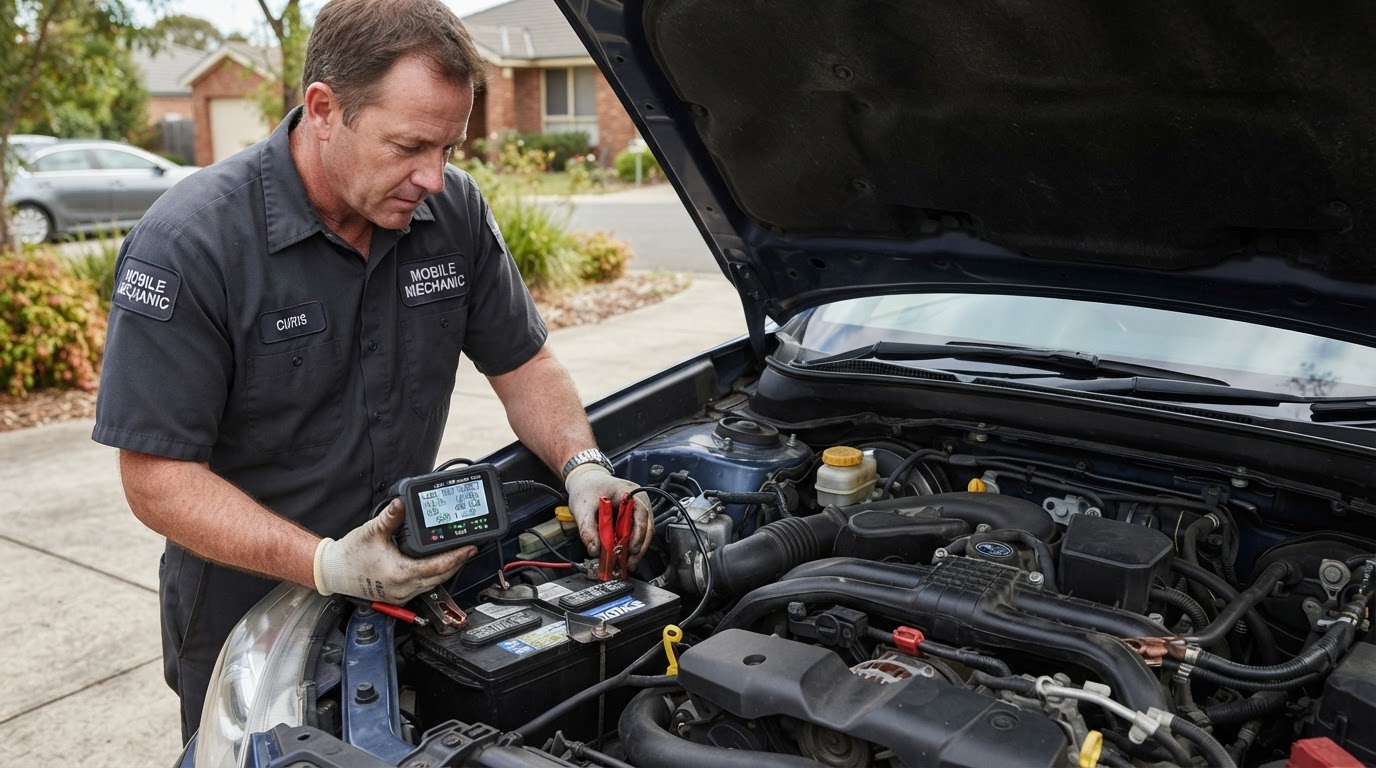
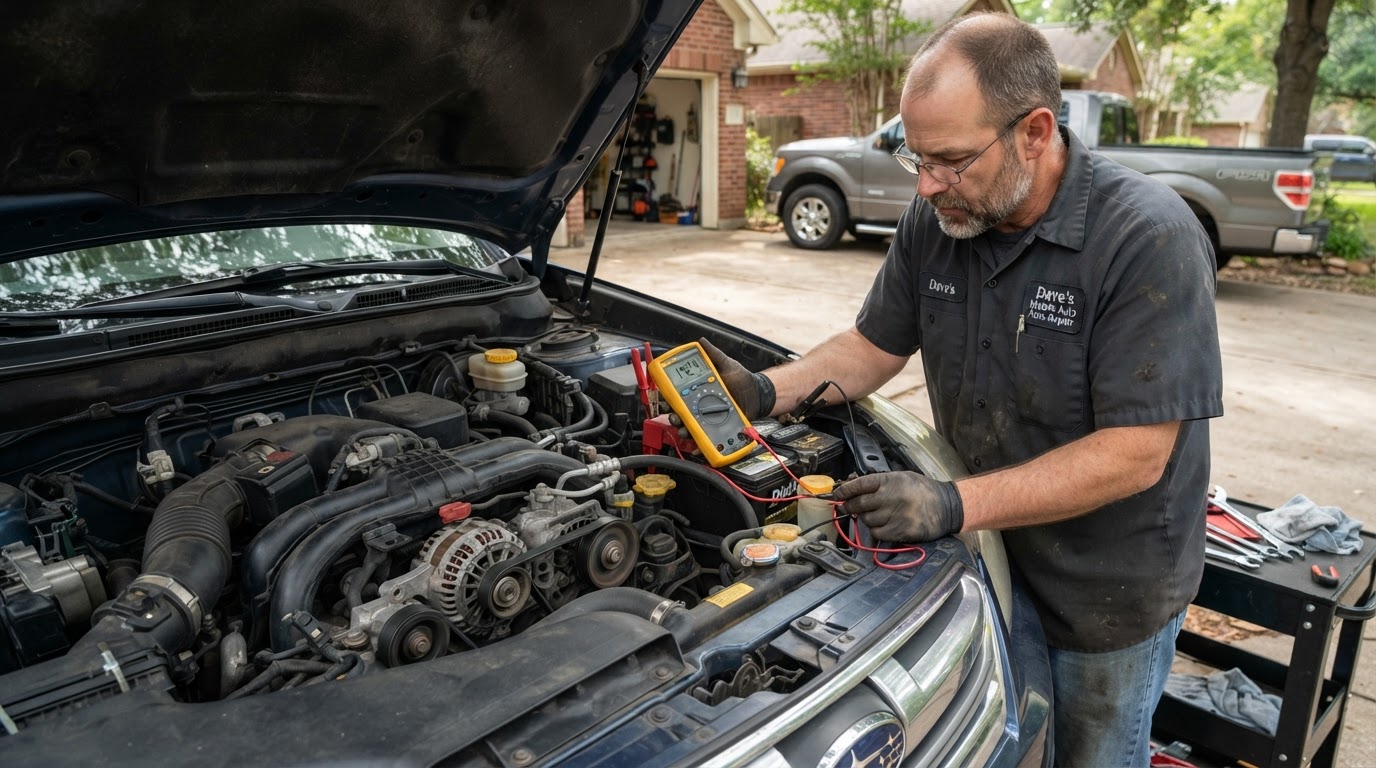
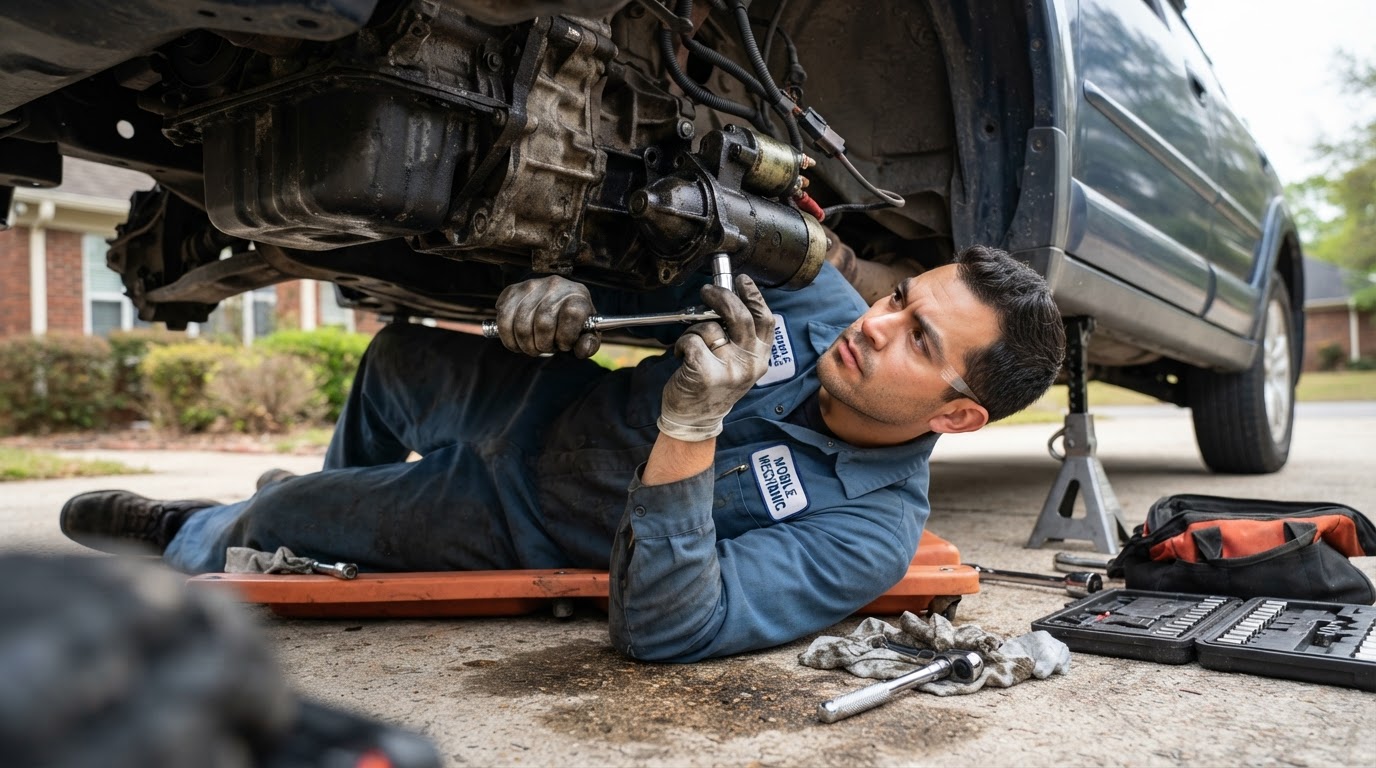
See how we bring this service to your vehicle.
What to Expect
- We load-test the existing battery and check resting and charging voltage before recommending anything.
- We measure alternator output and ripple with the engine running and test the voltage regulator.
- We verify voltage and ground at the starter and test the solenoid circuit to isolate a no-crank cause.
- We inspect terminals, cables, and connections for corrosion or damage that mimics a bad battery.
- You receive a written estimate and the test results before any replacement begins.
Choosing a Battery & Electrical Provider
- Choose a mechanic who load-tests the battery and checks charging voltage before recommending a replacement.
- Look for someone who carries common battery group sizes and confirms fitment for your vehicle.
- Confirm they use the correct battery type — AGM for start-stop vehicles — not a generic substitute.
- Ask whether the alternator or starter can be replaced at your location or needs a shop.
- Verify old-battery recycling is included and that you get a written estimate before work starts.
Questions to Ask Before Scheduling
- Will you test the battery and charging system before recommending a replacement?
- Can you bring the correct battery for my vehicle, including AGM if needed?
- Can the alternator or starter be replaced at my home or workplace?
- What does the estimate include — parts, labor, and old-battery disposal?
- How do you tell whether it's the battery, alternator, or starter?
- Are you available after hours if my car won't start in the morning?
Battery & Electrical — FAQs
How do I know if it's the battery or the alternator?
If a freshly charged battery drains while driving or shortly after, the alternator likely isn't charging. If the battery tests weak under load but charging voltage is normal, the battery is the problem. We test both before recommending any replacement.
Do you bring a replacement battery with you?
Yes. We carry common battery group sizes and confirm fitment for your vehicle when you call. The old battery is tested first — if it's still good, we won't replace it.
Can you replace an alternator or starter in my driveway?
Most alternators and starters are accessible and replaced on-site. Some vehicles with tight packaging may require a shop referral — we'll advise you honestly before starting.
My battery keeps dying overnight. Can you find the cause?
Yes. A parasitic draw test isolates which circuit is draining the battery when the vehicle is off. We trace it to the specific component so the drain stops for good.
Does my vehicle need a special battery?
Vehicles with start-stop technology usually require an AGM battery. We confirm the correct type, group size, and cold-cranking amps for your specific vehicle before installing.
Can you tell the difference between a bad starter and a weak battery?
Yes. A single click with no crank can be either, so we load-test the battery and check voltage at the starter before recommending any replacement. Rapid clicking usually points to a weak battery; a single solid click often points to the starter.