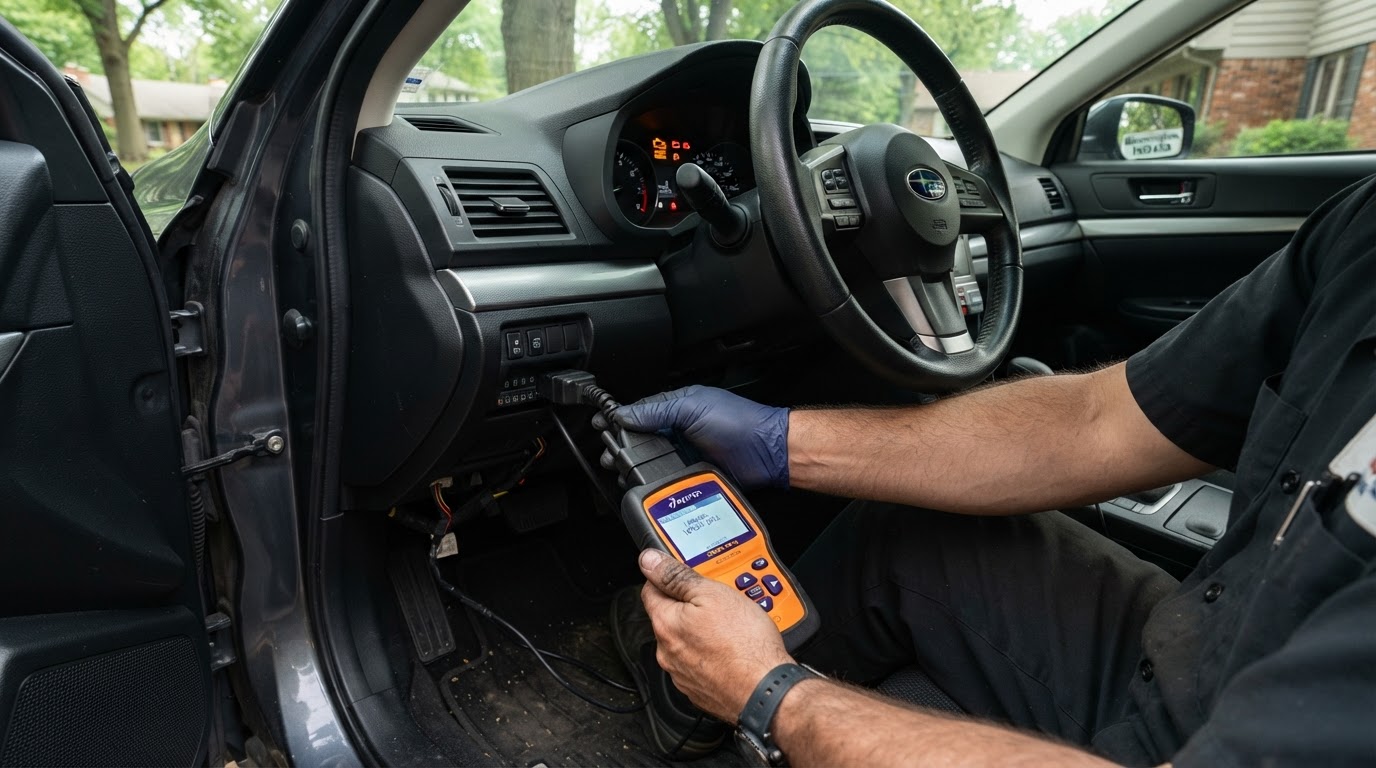
Our mobile check engine light diagnostics service brings professional OBD-II scanning and code analysis directly to your vehicle anywhere in Bloomington, Indiana. We identify the root cause — not just the code — and give you a clear, honest repair plan.
A check engine light means the vehicle's onboard computer detected a fault in the emissions, fuel, ignition, or related system. The light can be steady or flashing, and the two mean different things. We read the stored and pending codes, review live sensor data, and combine that with a hands-on inspection to find the actual failing component — so you don't pay to replace a part that wasn't the problem.
What Does a Check Engine Light Mean?
The check engine light is your vehicle's way of telling you the onboard computer — the engine control module (ECM) — has detected a problem that affects emissions, fuel economy, or drivability. When a sensor reads outside its expected range, the ECM stores a diagnostic trouble code (DTC) and turns on the light.
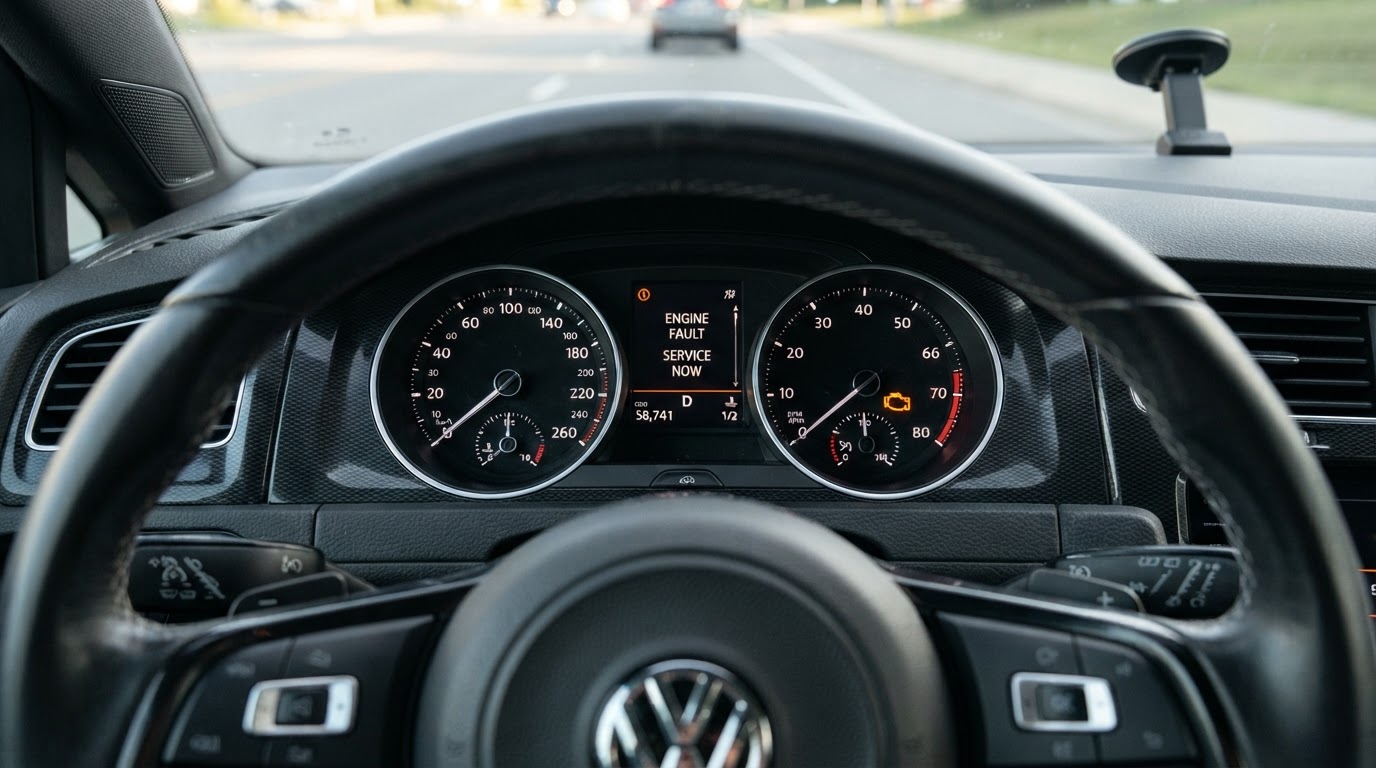
A steady light usually points to a non-emergency fault that should still be diagnosed soon. A flashing check engine light is more serious: it signals an active misfire that can dump unburned fuel into the catalytic converter, overheat it, and cause expensive damage. If your light is flashing, reduce speed and load and call for diagnosis right away.
Steady vs. Flashing: Why the Difference Matters
A steady check engine light means a fault has been detected and stored. The vehicle is usually still drivable, but the cause should be diagnosed before it worsens or affects fuel economy and emissions.
A flashing light indicates a misfire severe enough to damage the catalytic converter. Continuing to drive with a flashing light — especially under load or at highway speed — risks a repair bill far larger than the original problem. We do not recommend remote diagnosis for a flashing light; it needs in-person testing at your vehicle.
Common Causes Behind a Check Engine Light
A code points to a system or circuit, not always the exact part. These are among the most common causes we find during mobile check engine light diagnostics in Bloomington:
- Loose or faulty gas cap (evaporative system leak)
- Oxygen (O2) sensor failure or slow response
- Worn spark plugs or a failing ignition coil causing a misfire
- Mass airflow (MAF) sensor reading incorrectly
- Vacuum leaks in intake hoses or PCV system
- Catalytic converter efficiency below threshold
- Evaporative emissions (EVAP) purge valve or vent valve faults
- Thermostat stuck open or cooling system out of range
Why a Code Alone Is Not a Diagnosis
The most expensive repair is the one that didn't fix the problem. A P0301 code tells you cylinder one is misfiring, but the cause could be a spark plug, an ignition coil, a fuel injector, or a vacuum leak — and replacing the wrong part wastes money without solving anything.
We interpret the code in context: we review live sensor data, inspect the related wiring and vacuum lines, and perform targeted tests to confirm the actual failing component before recommending any replacement. That protects you from a parts-swap chain.
Can the Repair Be Done at My Location?
Most check engine light causes — sensors, ignition components, vacuum leaks, gas caps, and many EVAP valves — can be diagnosed and repaired on-site at your home, workplace, or parking spot in Bloomington. The scanner, inspection tools, and most confirmation tests travel with us.
A small number of faults require shop-level equipment, such as a smoke machine for deep evaporative leak detection. When that's the case, we tell you honestly and help coordinate rather than guessing on-site.
What to Have Ready When You Call
To help us arrive prepared, have a few details ready:
- Your vehicle year, make, and model
- Whether the light is steady or flashing
- When it came on and what you were doing at the time
- Any symptoms — rough idle, hesitation, reduced power, poor fuel economy
- Whether any parts were recently replaced
- Your address or location in the Bloomington area
When You Should Not Keep Driving
If the light is flashing, you notice a severe misfire, the engine is running rough, or you smell fuel or sulfur, reduce speed and load immediately and call for diagnosis. A flashing misfire can damage the catalytic converter in a short distance.
If the light is steady and the vehicle drives normally, it is usually safe to drive to your destination and schedule diagnosis — but don't ignore it indefinitely, as a small fault can worsen and affect fuel economy or emissions.
How Long Does a Check Engine Light Diagnostic Take?
Most check engine light diagnostic visits take 30 to 60 minutes, depending on how many codes are stored, whether the fault is intermittent, and how accessible the related components are on your engine. A single, consistent code with an obvious cause can be confirmed quickly; a multi-code or intermittent problem takes longer because we have to reproduce the condition and test each possibility.
We give you a realistic time estimate before we begin, and in many cases we can perform the repair on the same visit if the part is available and you approve the work. You never pay for a repair you didn't authorize — diagnosis and repair are separate steps, and you decide what happens next.
Can You Pass an Emissions Test With the Light On?
No. In Indiana, a vehicle with an illuminated check engine light will not pass an OBD-II emissions test, regardless of how well it appears to run. The light indicates a stored emissions-related code, and the testing equipment reads those codes directly. Clearing the code just before the test doesn't work either — the vehicle's readiness monitors must complete their self-tests after a code is cleared, and a test will fail if the monitors aren't ready.
If you've failed an emissions test or your registration renewal is blocked by a check engine light, we diagnose the actual cause, repair it, and confirm the readiness monitors are complete before you re-test. This prevents the cycle of clearing a code, failing the test, and repeating the process.
What a Check Engine Light Diagnosis Costs
Diagnostic pricing varies with the vehicle, the number and complexity of codes stored, whether the fault is intermittent or consistent, and the time required to isolate the root cause. Some faults are found quickly in a scan; others require live-data analysis, component testing, and multiple test drives to reproduce.
We give you an upfront estimate for the diagnostic visit before we begin — no surprise charges. In many cases, the diagnostic fee is credited toward the repair if you have us do the work. You always get a written estimate for any repair before it starts, and you decide whether to proceed.
Who Needs This Service?
Drivers in Bloomington, Indiana whose check engine light has come on steady or is flashing, who have failed an emissions test, or who recently replaced a part only to have the light return. If you're about to buy a used car and want hidden codes checked, our pre-purchase inspection covers that too.
Common Symptoms
If you're noticing any of these, it's time to call.
- Check engine light is on steady or flashing
- Rough idle, hesitation, or stalling
- Reduced fuel economy
- Failed emissions test
- Recently replaced a part and the light returned
What We Do
Our mobile mechanic handles this on-site in Bloomington.
- Full OBD-II diagnostic scan with live data review
- Visual inspection of sensors, wiring, and vacuum lines
- Pinpoint the actual failing component, not just the code
- Clear, written estimate before any repair begins
Check Engine Light Diagnostics — On-Site in Bloomington
Real mobile service, performed where your vehicle sits.
How the Service Works
A clear, step-by-step process from arrival to a verified fix.
- 1
Scan & Read Codes
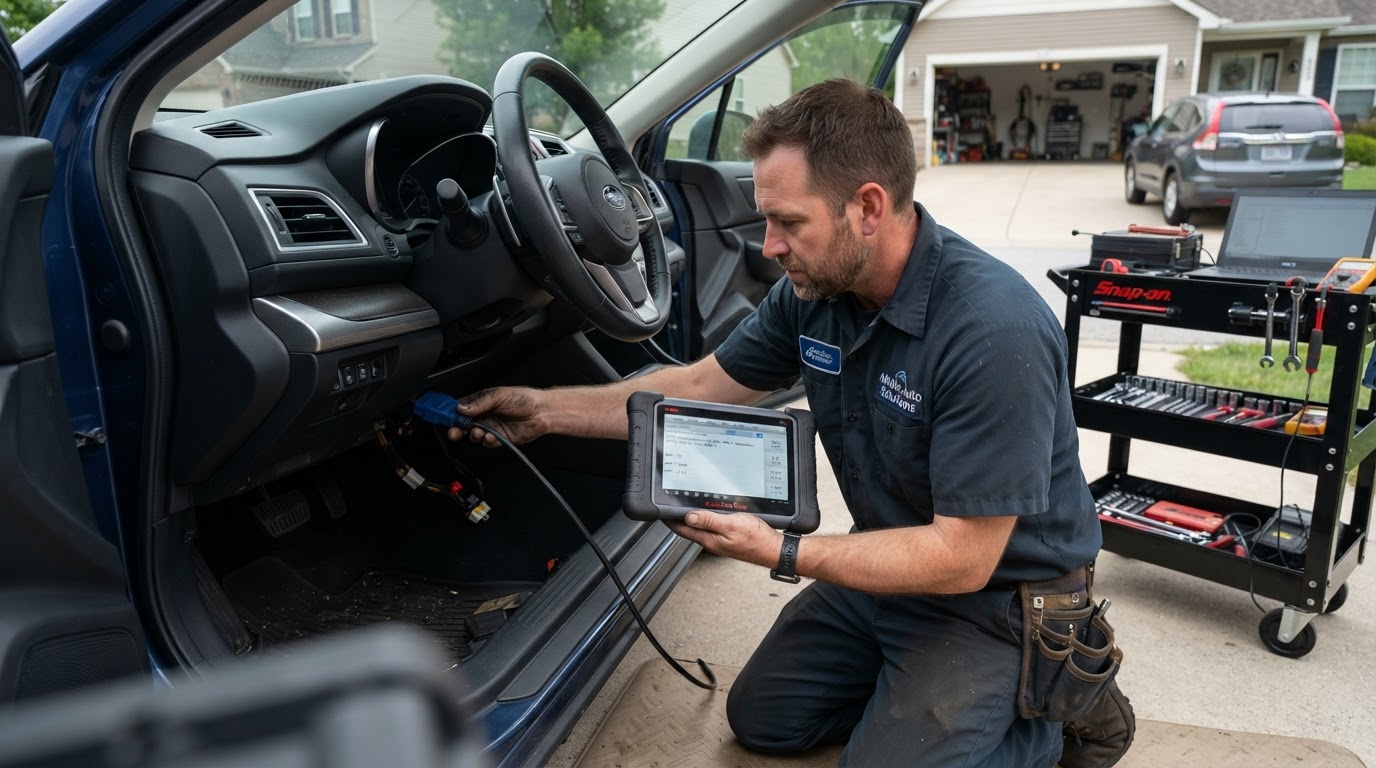
We connect a professional OBD-II scanner, read stored and pending codes, and review live sensor data for the affected system.
- 2
Hands-On Inspection
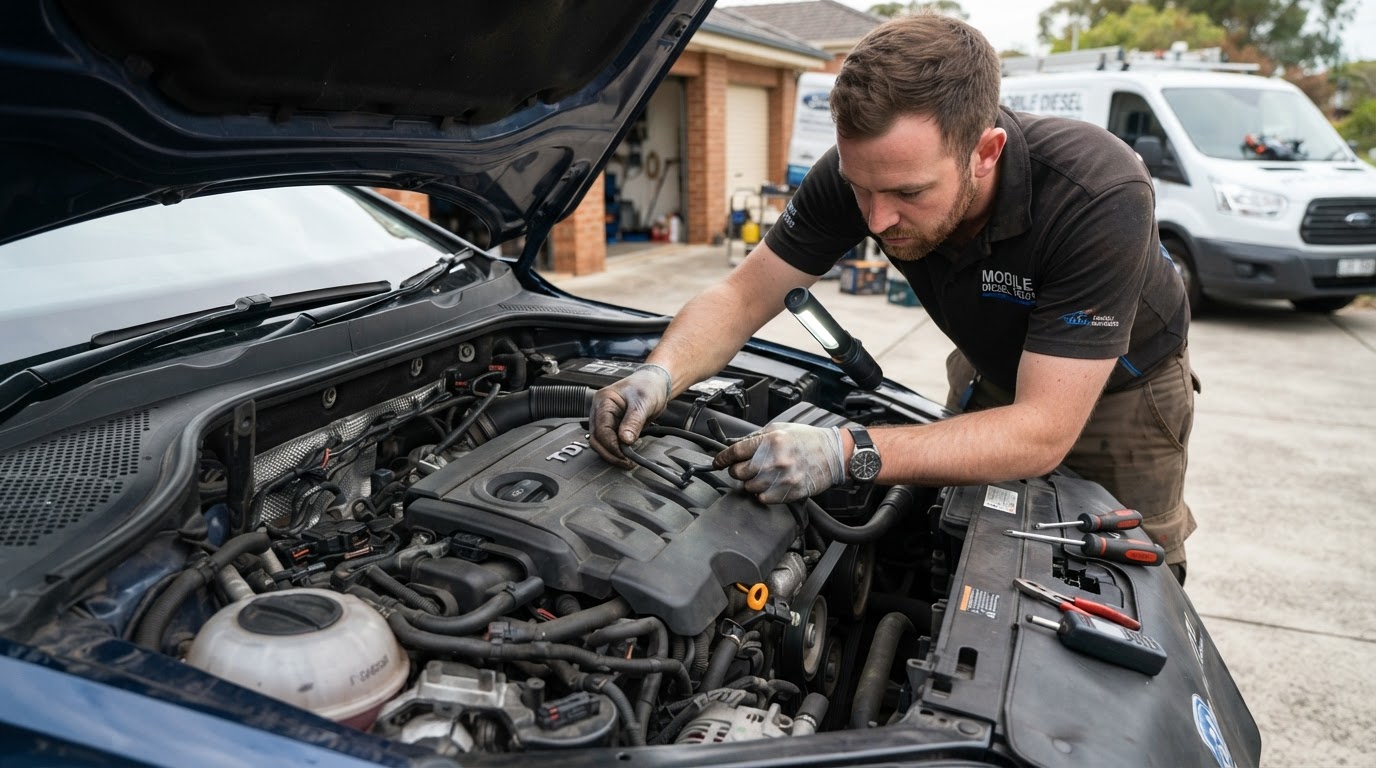
We visually inspect the sensors, wiring, and vacuum lines tied to the code and perform targeted tests to confirm the root cause.
- 3
Clear Diagnosis & Estimate
You get a plain-English explanation of what's wrong, what it takes to fix it, and a written estimate — no work starts without your approval.
Pricing Factors
Cost varies based on your vehicle and the specifics of the job. You approve a clear estimate before any work begins.
- Number and complexity of codes stored
- Whether the fault is intermittent or consistent
- Systems and sensors involved in testing
- Time required to isolate the root cause
Mobile Service Suitability
Check engine light diagnostics are well suited to mobile service. The scanner, inspection, and most confirmation tests travel with us, and the majority of common check engine light causes — sensors, ignition, vacuum leaks — can be diagnosed and often repaired on-site. We won't guess remotely; we test in person at your vehicle.
Check Engine Light Diagnostics — FAQs
Can you tell me what's wrong just from the code?
A code points to a system, not always the exact part. We combine the scan with a hands-on inspection so you don't pay to replace a sensor that wasn't the problem.
Is it safe to drive with the check engine light on?
A steady light usually means a non-emergency fault, but a flashing light signals a misfire that can damage the catalytic converter. We recommend pulling over and calling us.
Can you clear the code for me?
We can clear codes after the repair is complete. Clearing a code without fixing the cause just turns the light off temporarily — it will return.
How long does a check engine light diagnostic take?
Most visits take 30-60 minutes depending on how many codes are present and whether the fault is intermittent. We give you a realistic estimate up front.
My light came back after I replaced a part. Why?
Replacing the part a code points to doesn't always fix the cause — the code identifies a system, and the actual fault may be elsewhere. We re-test to find the real culprit.
Can a loose gas cap cause a check engine light?
Yes. A loose or faulty gas cap is one of the most common causes of an evaporative system code. We check the simple causes first before recommending deeper testing.