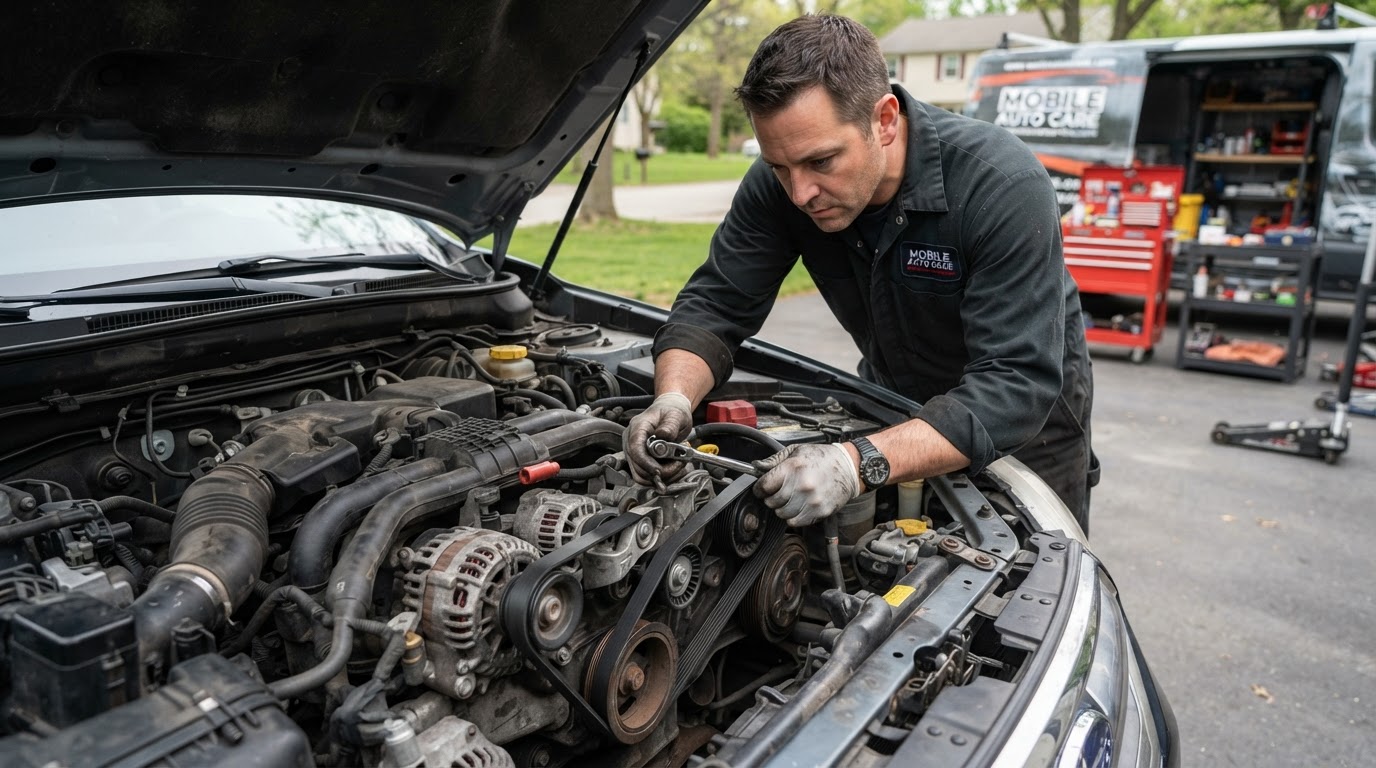
A squealing belt or visible cracking can leave you stranded when it snaps. Our mobile serpentine belt replacement in Bloomington, Indiana inspects and replaces drive belts, tensioners, and pulleys at your location.
The serpentine belt drives your alternator, power steering pump, water pump, and air conditioning compressor. When it cracks, glazes, or frays, it can squeal — and when it snaps, you lose charging, steering assist, and cooling all at once. We inspect belt condition, check tensioner travel, and replace the belt and any worn tensioner or idler pulley before it fails.
What the Serpentine Belt Does
The serpentine belt is a single, continuous belt that drives multiple engine accessories — the alternator (charging), power steering pump, water pump (cooling), and air conditioning compressor. It's routed around several pulleys and kept tight by an automatic tensioner. When the engine runs, the belt transfers rotational power from the crankshaft to each accessory.
Because one belt drives so many critical systems, a failure is serious. When the belt snaps, you lose charging, steering assist, and cooling all at once — the battery light comes on, the steering gets heavy, and the engine starts to overheat. That's why inspecting and replacing the belt before it fails matters.
Signs Your Belt Needs Replacement
A failing serpentine belt gives warning before it snaps. Watch for:
- A squealing noise at startup or under acceleration
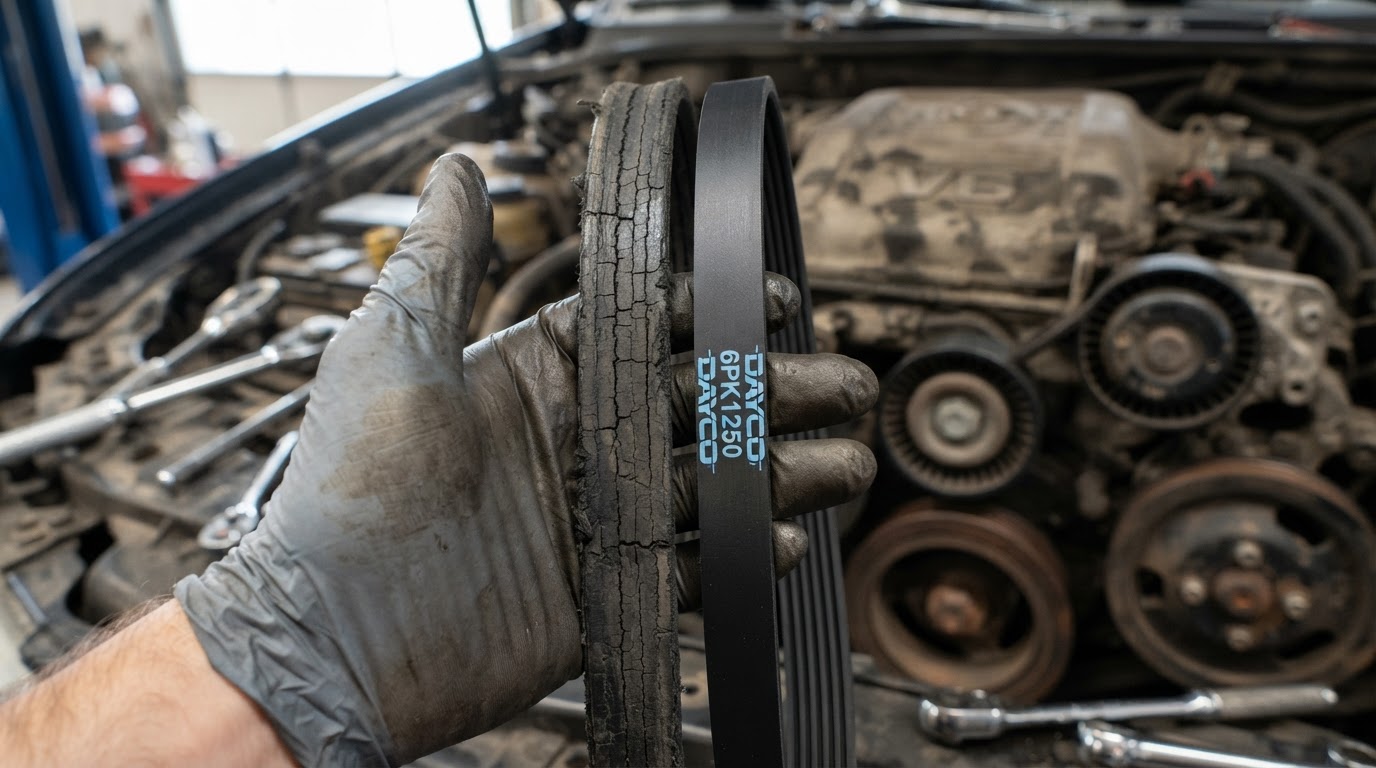
- Visible cracks, fraying, or glazing on the belt ribs
- Battery or charging warning light on the dash
- Power steering that gets stiff momentarily, then recovers
- A burning rubber smell under the hood
- The belt is more than 60,000-80,000 miles old
- A flapping or slapping noise from the belt area
Why Belts Squeal
A squealing belt is usually caused by one of three things: a glazed or loose belt that's slipping on the pulleys, a weak tensioner that isn't keeping the belt tight enough, or a contaminated pulley (oil or coolant on the belt). The squeal is the belt slipping — and slipping generates heat that accelerates wear.
We inspect to find the exact cause. Sometimes the belt is fine but the tensioner is weak; sometimes the belt is glazed and needs replacement. Replacing a belt without fixing a weak tensioner means the new belt will squeal too.
Should the Tensioner Be Replaced Too?
The automatic tensioner keeps the belt at the correct tension. Over time, its internal spring weakens and the pulley bearing can fail — causing under-tension, squealing, and premature belt wear. A weak tensioner shortens belt life.
We measure tensioner travel and spin the idler pulleys to check for noise or roughness. If the tensioner or an idler pulley is worn, replacing it with the belt prevents a return visit and protects the new belt. We recommend replacement only when it's out of spec — we don't replace parts that are still serviceable.
What Happens If the Belt Breaks While Driving
If the serpentine belt breaks while you're driving, you lose multiple systems at once:
- The alternator stops charging — the battery light comes on and the vehicle runs on battery power
- Power steering assist is lost — the steering becomes heavy
- The water pump stops circulating coolant — the engine begins to overheat
- The air conditioning stops working
- The engine will eventually stall and won't restart once the battery drains
How Often Should the Belt Be Replaced?
Most serpentine belts are inspected starting around 60,000 miles and replaced by 80,000-100,000 miles, or sooner if cracking, glazing, or fraying appears. We inspect the belt condition and recommend based on what we see — not just the mileage.
If you don't know when the belt was last replaced and your vehicle has 80,000+ miles, an inspection is a smart move. A belt that looks fine can have cracks on the rib side that aren't visible from the top.
Can the Belt Be Replaced at My Location?
Serpentine belt replacement is highly mobile-friendly and usually completed in under an hour at your location. The belt, tensioner, and idler pulleys are all accessible through the engine bay on most vehicles.
This is one of the most straightforward on-site repairs we offer. We bring the correct OEM-spec belt and any needed tensioner or pulley, route the belt properly, and verify tension and operation before you drive.
How Long Does Belt Replacement Take?
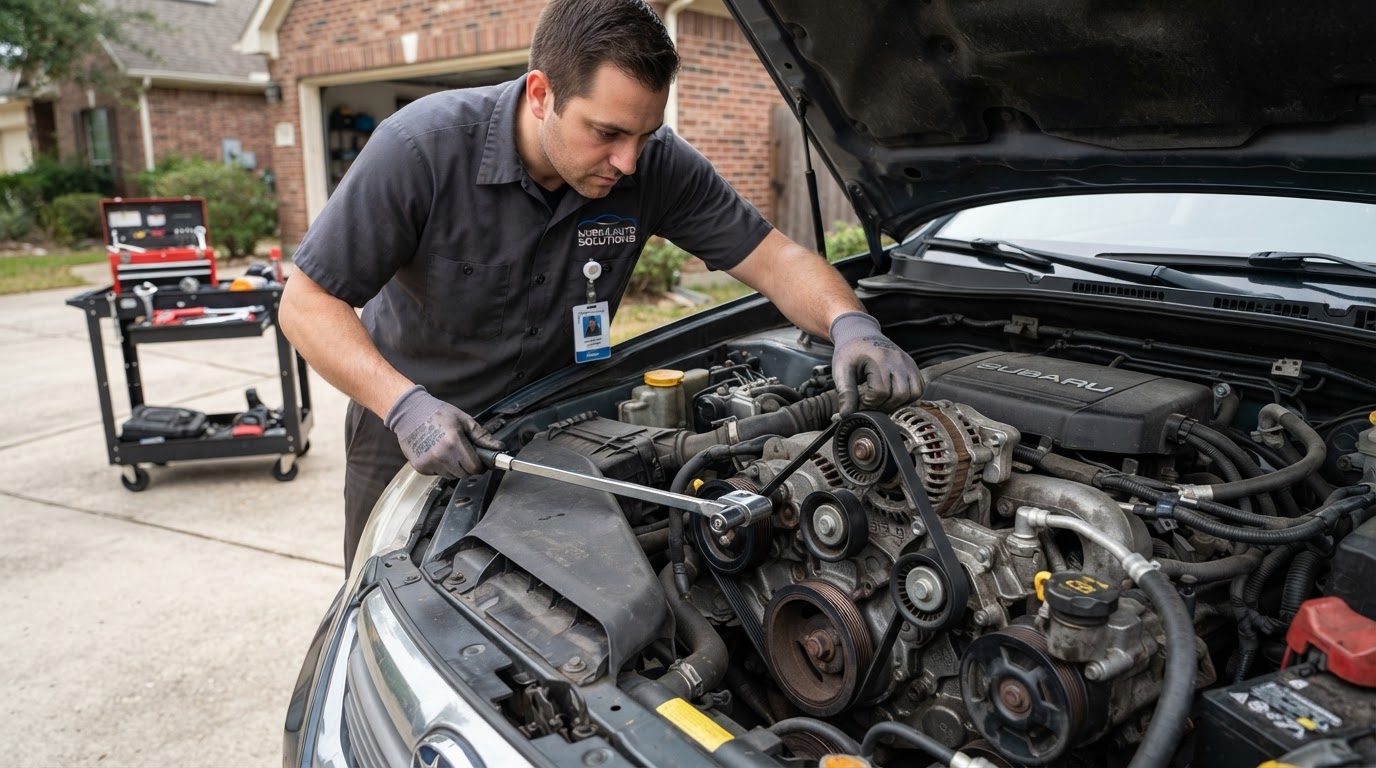
Serpentine belt replacement is one of the quickest on-site services — typically 30 to 60 minutes when only the belt is being replaced. If the tensioner or an idler pulley is also being replaced, add 15-30 minutes. The job involves releasing tension, removing the old belt, inspecting the pulleys and tensioner, routing the new belt correctly, and verifying tension and operation.
We give you a realistic time estimate before we begin. If the correct belt and any needed tensioner or pulley are available and you approve the work, we complete the replacement on the same visit — including a startup check for squeal and verification that all driven accessories operate.
What Belt Replacement Costs
Pricing varies with the belt length and number of ribs for your engine, whether the tensioner or idler pulleys also need replacement, the accessibility of the belt routing on your engine, and part quality. A belt-only replacement on a common engine is a different scope from a belt, tensioner, and both idler pulleys on a vehicle with tight access.
We inspect first — belt condition, tensioner travel, and pulley condition — then give you a written estimate covering only the parts and labor your vehicle actually needs. You approve the estimate before any work begins.
Belt Inspection: What We Look For
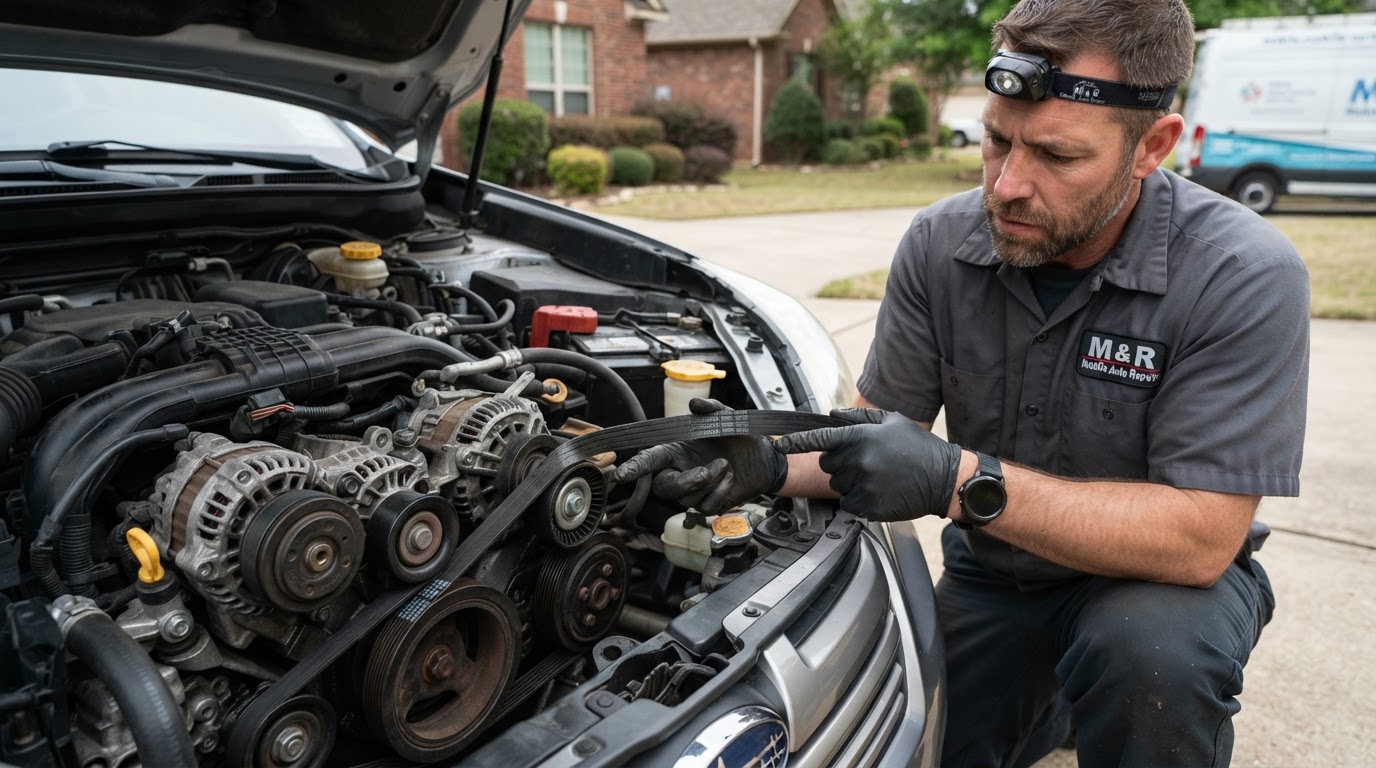
When we inspect a serpentine belt, we check several things. We look for cracking on the rib side — the side that contacts the pulleys — because cracks there aren't visible from the top but cause the belt to fail. We check for glazing, a shiny, hardened surface that means the belt has been slipping and overheating. We look for fraying at the edges, missing chunks of rib material, and contamination from oil or coolant that degrades the rubber.
We also spin each idler pulley and the tensioner pulley to check for noise, roughness, or play — a failing pulley bearing causes noise and can seize, which destroys the belt. And we measure tensioner travel to confirm the spring is still applying correct tension. A belt that looks fine but runs on a weak tensioner will squeal and wear prematurely — replacing the belt without fixing the tensioner is a waste.
Timing Belt vs. Serpentine Belt: The Difference
The serpentine belt (also called the drive belt or accessory belt) is external and drives the alternator, power steering pump, water pump, and AC compressor. It's visible at the front of the engine and replaced every 60,000-100,000 miles. A timing belt is internal — it synchronizes the engine's camshaft and crankshaft and is hidden behind a cover. Not all engines have a timing belt; many use a timing chain instead.
We service serpentine belts on-site. Timing belt replacement is a major service that requires significant disassembly and is typically done at a shop — if your vehicle is due for a timing belt, we'll advise you honestly and help coordinate. If you're unsure which belt your vehicle has or what's due, we inspect and clarify during any service visit.
Seasonal Belt Considerations for Indiana Drivers
Indiana's temperature extremes stress belts. Cold weather makes rubber brittle — a belt that's aging may crack or snap on the first cold morning when the rubber is stiff and the engine cranks hard. Hot summer weather softens rubber and accelerates glazing, especially if the belt is slipping on a weak tensioner. Both seasons expose a belt that's near the end of its service life.
Bloomington's humidity can also cause belt squeal that appears only in damp weather — moisture on the pulleys reduces friction and causes slipping. If your belt squeals on damp mornings but not dry ones, the belt or tensioner is marginal and should be inspected. We carry common belt sizes and can inspect, measure, and replace at your location before a failure leaves you stranded.
Choosing a Belt Service Provider
When choosing a belt service provider, look for one who inspects the tensioner and pulleys, not just the belt — a weak tensioner or failing pulley causes premature belt failure, and replacing only the belt means the new one will squeal or fail soon too. A provider who skips the tensioner inspection is doing half the job.
Ask whether they use the correct OEM-spec belt for your engine, not a generic substitute. Confirm they verify proper routing and tension after installation and check for squeal at startup. And verify they advise on related components — if the tensioner is worn, they should recommend replacing it with the belt rather than waiting for it to fail separately.
Who Needs This Service?
Bloomington drivers hearing a squealing noise at startup or acceleration, who see visible cracks, fraying, or glazing on the belt, whose battery or charging warning light is on, whose power steering gets stiff momentarily, or whose belt is more than 60,000-80,000 miles old. A failing belt can leave you stranded.
Common Symptoms
If you're noticing any of these, it's time to call.
- Squealing noise at startup or acceleration
- Visible cracks, fraying, or glazing on the belt
- Battery light or charging warning on
- Power steering gets stiff momentarily
- Belt is more than 60,000-80,000 miles old
What We Do
Our mobile mechanic handles this on-site in Bloomington.
- Inspect belt condition, tensioner, and pulleys
- Replace belt with the correct OEM-spec part
- Replace noisy tensioner or idler pulley if worn
- Verify proper routing and tension after install
Mobile Serpentine Belt Replacement — On-Site in Bloomington
Real mobile service, performed where your vehicle sits.
How the Service Works
A clear, step-by-step process from arrival to a verified fix.
- 1
Inspect Belt & Tensioner
We inspect the belt for cracking, glazing, and fraying, measure tensioner travel, and spin the idler pulleys to find any that are noisy or rough.
- 2
Replace Belt & Hardware
We install the correct OEM-spec belt, route it properly, and replace the tensioner or any worn idler pulley so the new belt lasts.
- 3
Verify Tension & Routing
We confirm proper belt tension and routing, check for squeal at startup and under load, and verify all driven accessories operate.
Pricing Factors
Cost varies based on your vehicle and the specifics of the job. You approve a clear estimate before any work begins.
- Belt length and number of ribs for your engine
- Whether the tensioner or idler pulleys also need replacement
- Accessibility of the belt routing on your engine
- Part quality — economy vs. OEM-equivalent
Mobile Service Suitability
Serpentine belt replacement is highly mobile-friendly and usually completed in under an hour at your location. The belt, tensioner, and idler pulleys are all accessible through the engine bay on most vehicles, making this a textbook on-site repair.
Mobile Serpentine Belt Replacement — FAQs
What happens if the belt breaks while driving?
The serpentine belt drives the alternator, power steering, and water pump — losing it means loss of charging, steering assist, and eventually cooling. Replace before it fails.
Should I replace the tensioner too?
A weak tensioner shortens belt life. We measure tensioner travel and recommend replacement only when it's out of spec.
Why is my belt squealing?
Squealing usually means a glazed or loose belt, a weak tensioner, or a contaminated pulley. We inspect to find the exact cause.
How often should the belt be replaced?
Most belts are inspected at 60,000 miles and replaced by 80,000-100,000 or when cracking and glazing appear. We follow your condition.
Can you replace the belt at my house?
Yes — serpentine belt replacement is one of the most mobile-friendly services. Most are done in under an hour at your location.
My battery light came on. Could it be the belt?
Yes. If the belt slips or breaks, the alternator stops charging and the battery light comes on. We inspect the belt and charging system to confirm.