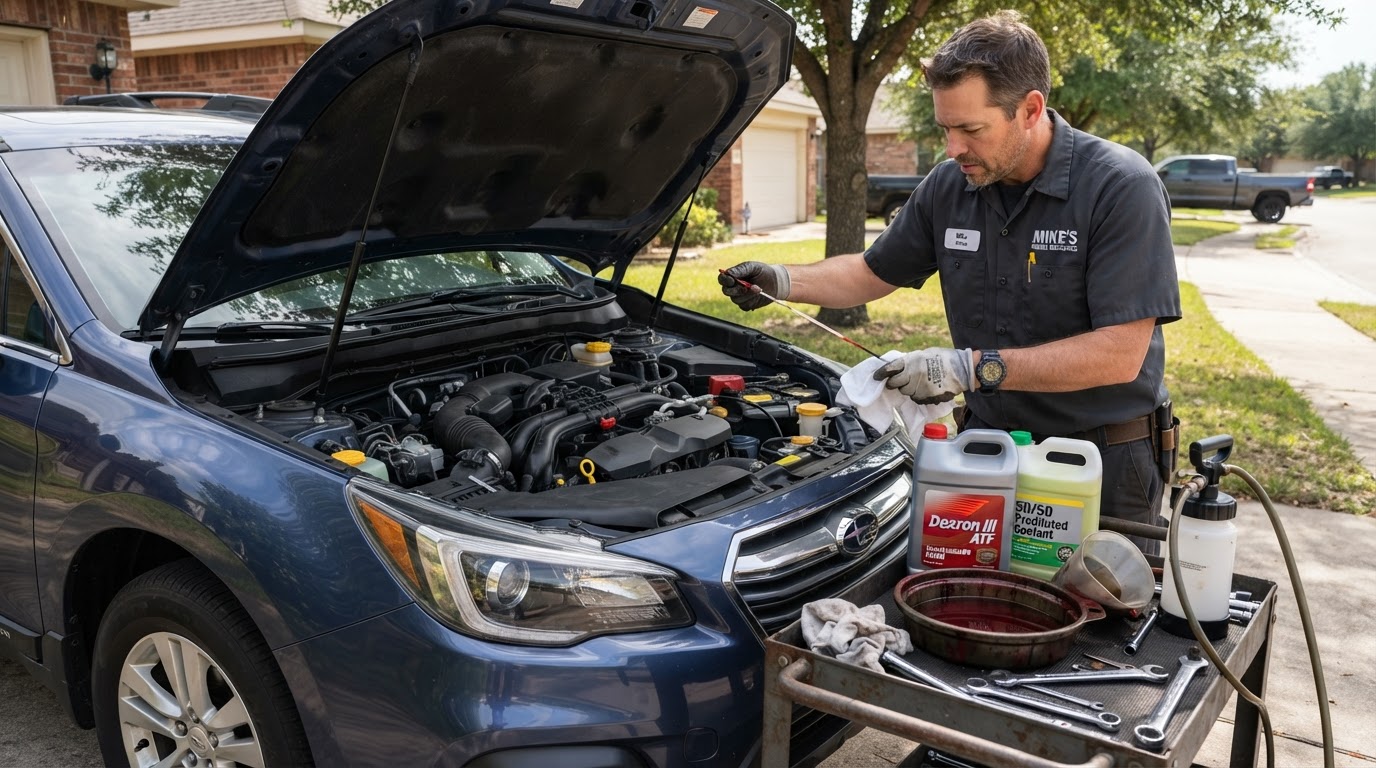
Clean fluids at the right intervals prevent costly failures. Our mobile fluid services in Bloomington, Indiana handle coolant, transmission, brake, and power steering fluid exchanges at your location — no shop visit required.
Your vehicle relies on multiple fluids — engine oil, coolant, transmission, brake, and power steering — each with its own service interval. Fluids degrade with heat and miles, and old or low fluid causes overheating, transmission failure, spongy brakes, and steering issues. We inspect level, color, and condition, then exchange fluids using manufacturer-specified types at the correct intervals.
Why Fluid Maintenance Matters
Your vehicle depends on multiple fluids, each with a specific job: engine oil lubricates the engine, coolant carries heat away, transmission fluid lubricates and operates the transmission, brake fluid transmits hydraulic pressure, and power steering fluid assists steering. Every one of them degrades with heat, miles, and time.
Old or low fluid is one of the most common causes of major failures — overheating from neglected coolant, transmission failure from burnt fluid, spongy brakes from moisture-contaminated brake fluid, and steering issues from degraded power steering fluid. Fluid service at the right interval is the cheapest insurance against expensive repairs.
Fluids We Service
We inspect and exchange the fluids your vehicle needs at its mileage:
- Engine coolant — prevents overheating and freezing, protects against corrosion
- Transmission fluid — lubricates and cools the transmission, operates the valves
- Brake fluid — transmits hydraulic pressure; absorbs moisture over time
- Power steering fluid — lubricates and operates the power steering pump and rack
- Engine oil — the most frequent service; see our oil change & maintenance page
- Differential and transfer case fluid — for AWD/4WD vehicles
Signs a Fluid Needs Service
Fluids usually show signs when they're due or degraded. Watch for:
- Dark, brown, or burnt-smelling transmission fluid (should be red/pink)
- A soft or spongy brake pedal — moisture in old brake fluid
- Rusty, murky, or overdue coolant
- Power steering whine, groan, or a stiff steering wheel
- No record of when the fluid was last changed
- A fluid leak or low fluid level
- You've passed the manufacturer's service interval
How Often Should Fluids Be Changed?
Each fluid has its own interval based on the fluid type and your vehicle. General guidelines:
- Engine coolant — typically every 5 years or 100,000 miles
- Brake fluid — typically every 2-3 years (it absorbs moisture)
- Transmission fluid — per your manual; often 30,000-60,000 miles for drain-and-fill
- Power steering fluid — typically every 30,000-50,000 miles or when degraded
- Differential fluid — typically every 30,000-60,000 miles for AWD/4WD
- Your vehicle's specific manufacturer interval — we follow the spec
Flush vs. Drain-and-Fill
There's an important distinction between a flush and a drain-and-fill. A flush uses pressurized equipment to force out old fluid and replace it — which can dislodge debris in an older, neglected transmission and cause problems. A drain-and-fill replaces a portion of the fluid gently, which is safer for many modern transmissions.
We follow what's safe for your vehicle. Many modern units prefer a drain-and-fill to avoid dislodging debris. We advise per vehicle based on the fluid condition, mileage, and manufacturer recommendation — we don't push a flush when a drain-and-fill is the right choice.
Can All Fluid Services Be Done at My Location?
Most fluid services — coolant, brake, power steering, and transmission drain-and-fill — are mobile-friendly and done at your location. We bring the correct manufacturer-specified fluids and inspect for leaks during the service.
Not every specialty flush can be performed mobile. Some modern transmissions require specific shop equipment for a full pressurized exchange, and certain coolant services benefit from shop-level equipment. We follow what's safe for your vehicle and advise honestly when a procedure is better done at a shop.
Why Brake Fluid Matters for Safety
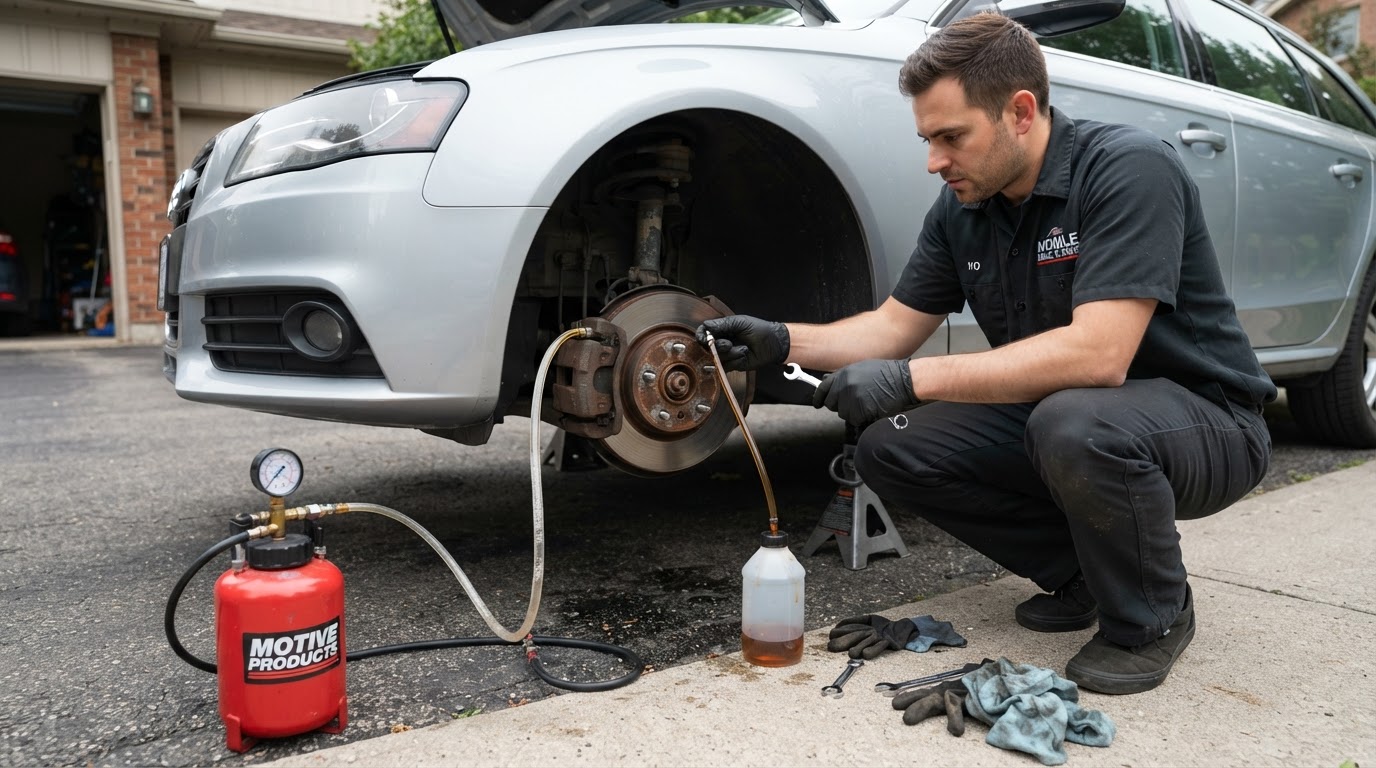
Brake fluid is hygroscopic — it absorbs moisture from the air over time. That moisture lowers the fluid's boiling point (causing brake fade under hard use) and causes internal corrosion in the brake system. A soft or spongy pedal is often a sign of moisture-contaminated brake fluid.
Brake fluid service is one of the most overlooked maintenance items — and one of the most important for safety. We inspect brake fluid condition and recommend exchange when it's degraded or past its interval.
How Long Does a Fluid Service Take?
Fluid service time varies with which fluids are being exchanged and your vehicle. A brake fluid exchange typically takes 30-45 minutes; a coolant exchange 45-60 minutes; a transmission drain-and-fill 45-90 minutes depending on whether a filter is also being replaced. Multiple fluids done in one visit take longer but save you a second appointment.
We give you a realistic time estimate before we begin. If the correct fluids are available and you approve the work, we complete the service on the same visit — including a leak check and proper fill verification before you drive.
What Fluid Services Cost
Pricing varies with which fluids are due based on mileage and condition, the fluid type and volume your vehicle requires, whether a flush or drain-and-fill is appropriate, and whether filters (transmission, etc.) are also due. A brake fluid exchange is a different scope from a full transmission service with filter replacement.
We inspect each fluid first — checking level, color, and condition against your manufacturer's interval — then give you a written estimate covering only the fluids and filters your vehicle actually needs. You approve the estimate before any work begins.
Using the Correct Fluid: Why It Matters
Using the correct fluid type is critical — the wrong fluid can cause damage, especially in transmissions and power steering systems. Modern transmissions often require specific ATF formulations (Dexron, Mercon, CVT fluid, or dual-clutch fluid) that are not interchangeable. Using the wrong transmission fluid can cause shudder, slipping, and transmission failure. Similarly, mixing coolant types can cause gelling and corrosion, and the wrong power steering fluid can damage seals.
We confirm the manufacturer-specified fluid type for your vehicle before service — we never substitute a generic fluid. We carry common fluid types and can source specific formulations when needed. If you're unsure what fluid your vehicle uses, we verify it from the manufacturer spec, not by guessing.
Fluid Service and Preventive Maintenance
Fluid service is the cheapest insurance against expensive failures. A transmission that costs thousands to replace can often be protected by a $150-200 fluid service at the right interval. An engine that overheats and blows a head gasket — a multi-thousand-dollar repair — can often be prevented by a coolant exchange before the fluid degrades. Brake fluid that boils under hard braking causes brake fade and longer stopping distances — a safety issue that a $50-80 fluid exchange prevents.
If you don't have records of when your fluids were last serviced, a fluid inspection is a smart starting point. We check the condition of every fluid and compare against your manufacturer's intervals to find what's due now versus soon — then you can prioritize based on what matters most for your vehicle's reliability and safety.
Seasonal Fluid Considerations for Indiana Drivers
Indiana's temperature extremes stress fluids in different ways. In summer, high ambient temperatures reduce coolant effectiveness and accelerate fluid degradation — a cooling system that's marginal in summer can overheat when the AC is running and the thermometer is in the 90s. In winter, cold temperatures thicken fluids — old, degraded transmission fluid flows slower when cold, causing harsh shifts and increased wear on cold starts.
Brake fluid is especially affected by Indiana's humidity — it absorbs moisture year-round, and by the time the pedal feels spongy, the fluid may have significant water content that lowers the boiling point and causes internal corrosion. A brake fluid exchange every 2-3 years is one of the most overlooked and most important maintenance items for Indiana drivers. We inspect fluid condition during any service visit and flag fluids that are due.
Choosing a Fluid Service Provider
When choosing a fluid service provider, look for one who inspects before recommending — each fluid should be checked for level, color, and condition against your manufacturer's interval, not blindly replaced on a schedule. A provider who recommends a transmission flush without inspecting the fluid condition may be upselling a service your vehicle doesn't need — or worse, recommending a flush that could dislodge debris in a high-mileage transmission.
Ask whether they use the manufacturer-specified fluid type, not a generic substitute. Confirm they advise on flush vs. drain-and-fill based on what's safe for your vehicle. And verify they check for leaks during and after the service — a fluid exchange that introduces a leak is worse than no service at all.
Who Needs This Service?
Bloomington drivers with dark or burnt-smelling transmission fluid, a soft or spongy brake pedal, rusty or overdue coolant, power steering whine or a stiff wheel, or no record of when fluids were last serviced. Fluid maintenance at the right intervals prevents the most expensive failures.
Common Symptoms
If you're noticing any of these, it's time to call.
- Dark or burnt-smelling transmission fluid
- Brake pedal feels soft or spongy
- Coolant is rusty or overdue
- Power steering whine or stiff wheel
- No record of last fluid service
What We Do
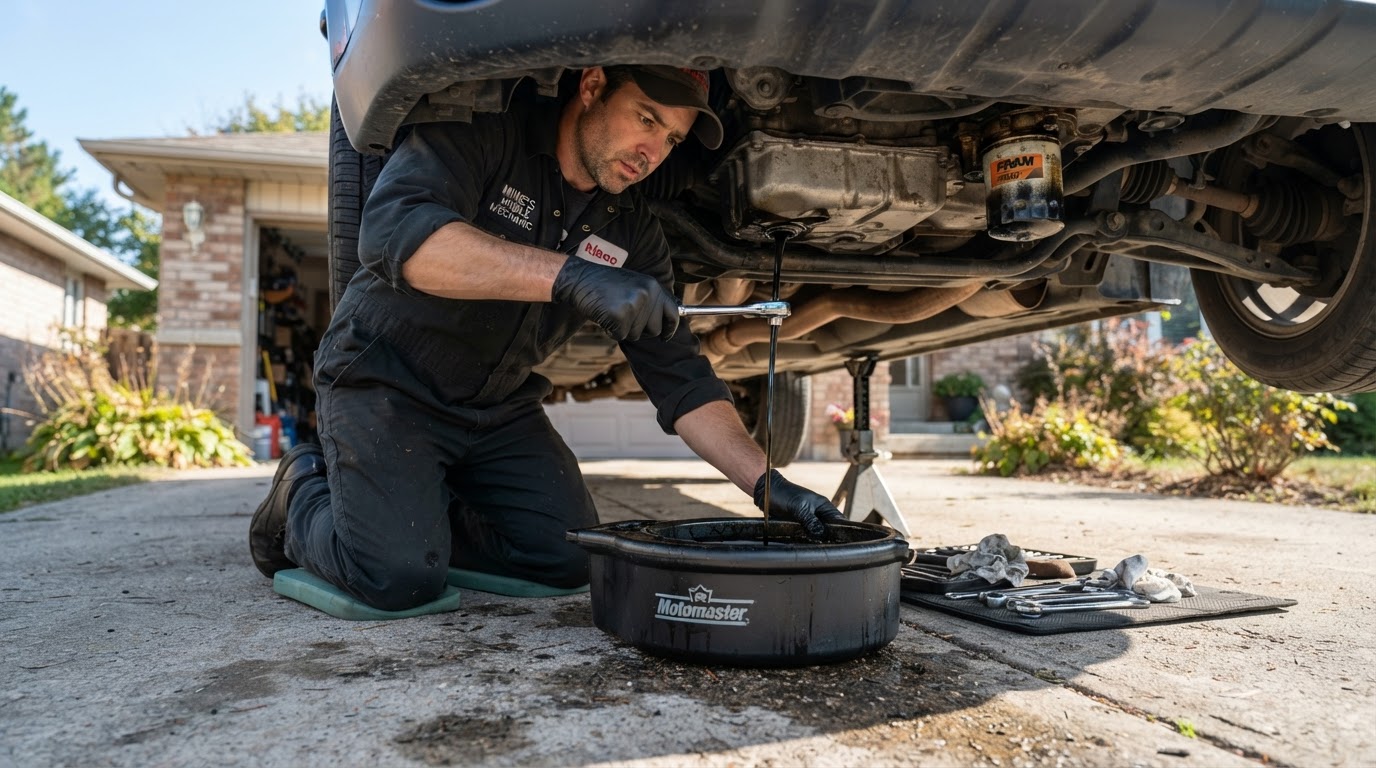
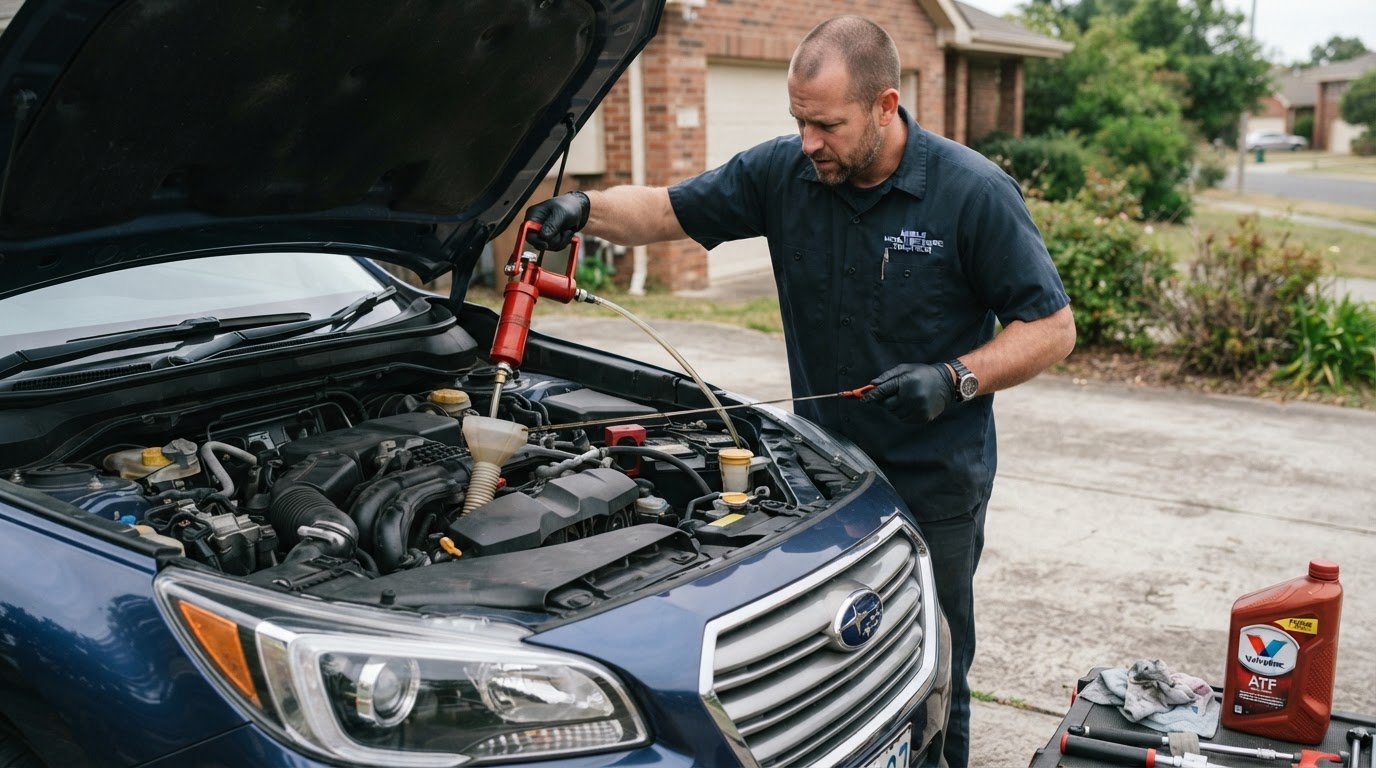
Our mobile mechanic handles this on-site in Bloomington.
- Inspect fluid level, color, and condition
- Exchange coolant, transmission, brake, or PS fluid
- Use manufacturer-specified fluid types
- Check for leaks and proper fill levels
Mobile Fluid Services — On-Site in Bloomington
Real mobile service, performed where your vehicle sits.
How the Service Works
A clear, step-by-step process from arrival to a verified fix.
- 1
Inspect Each Fluid
We check level, color, and condition of every fluid and compare against your manufacturer's service interval to find what's due now versus soon.
- 2
Exchange & Refill
We exchange the fluids that are due using the manufacturer-specified type, refill to the correct level, and inspect for leaks during the service.
- 3
Verify & Document
We confirm proper fill levels, check for leaks, and give you a record of what was serviced so your maintenance history stays intact.
Pricing Factors
Cost varies based on your vehicle and the specifics of the job. You approve a clear estimate before any work begins.
- Which fluids are due based on mileage and condition
- Fluid type and volume your vehicle requires
- Whether a flush or drain-and-fill is appropriate
- Whether filters (transmission, etc.) are also due
Mobile Service Suitability
Most fluid services — coolant, brake, power steering, and transmission drain-and-fill — are mobile-friendly. Not every specialty flush can be performed mobile, and some modern transmissions require specific shop equipment for a full exchange. We follow what's safe for your vehicle and advise honestly when a procedure is better done at a shop.
Mobile Fluid Services — FAQs
How often should fluids be changed?
It varies by fluid and vehicle — coolant often 5yr/100k, brake fluid every 2-3 years, transmission per your manual. We'll show you your vehicle's schedule.
Do you flush or drain-and-fill transmission fluid?
We follow what's safe for your transmission. Many modern units prefer a drain-and-fill to avoid dislodging debris — we advise per vehicle.
Can you do all fluids at my house?
Coolant, brake, power steering, and transmission drain-and-fill are mobile-friendly. Some specialty flushes require shop equipment — we'll tell you upfront.
Why is my brake pedal spongy?
Old or moisture-contaminated brake fluid is a common cause. A brake fluid exchange restores firm pedal feel and is mobile-friendly.
My transmission fluid is dark. Is that bad?
Dark or burnt-smelling transmission fluid is a sign it's degraded and due for service. We inspect the condition and advise on drain-and-fill vs. flush for your transmission.
Do you use the right fluid for my vehicle?
Yes — we use manufacturer-specified fluid types. Using the wrong fluid, especially in transmissions, can cause damage. We confirm the spec before service.