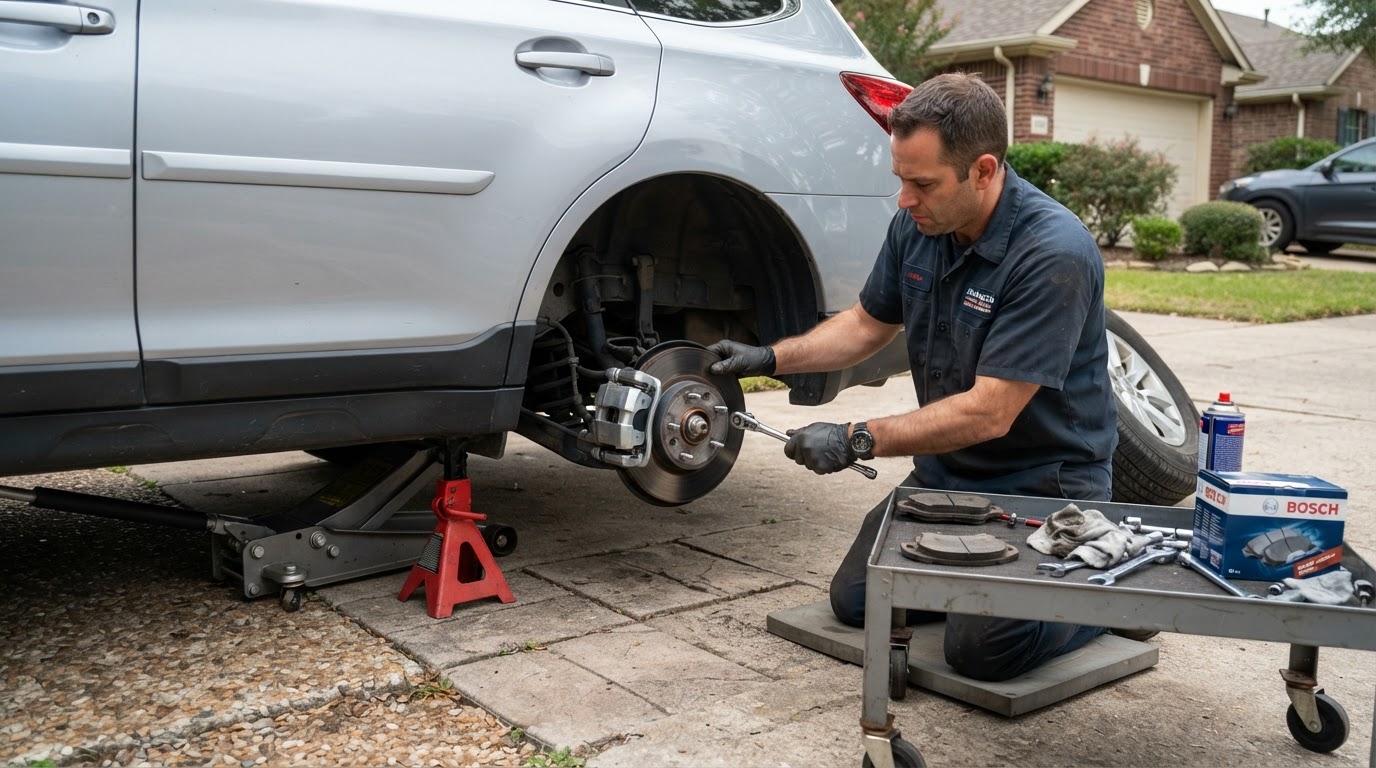
Squeaking, grinding, or a soft pedal? Our mobile brake pad replacement in Bloomington, Indiana installs quality pads at your location — with rotor inspection and hardware service included so your brakes are quiet and safe.
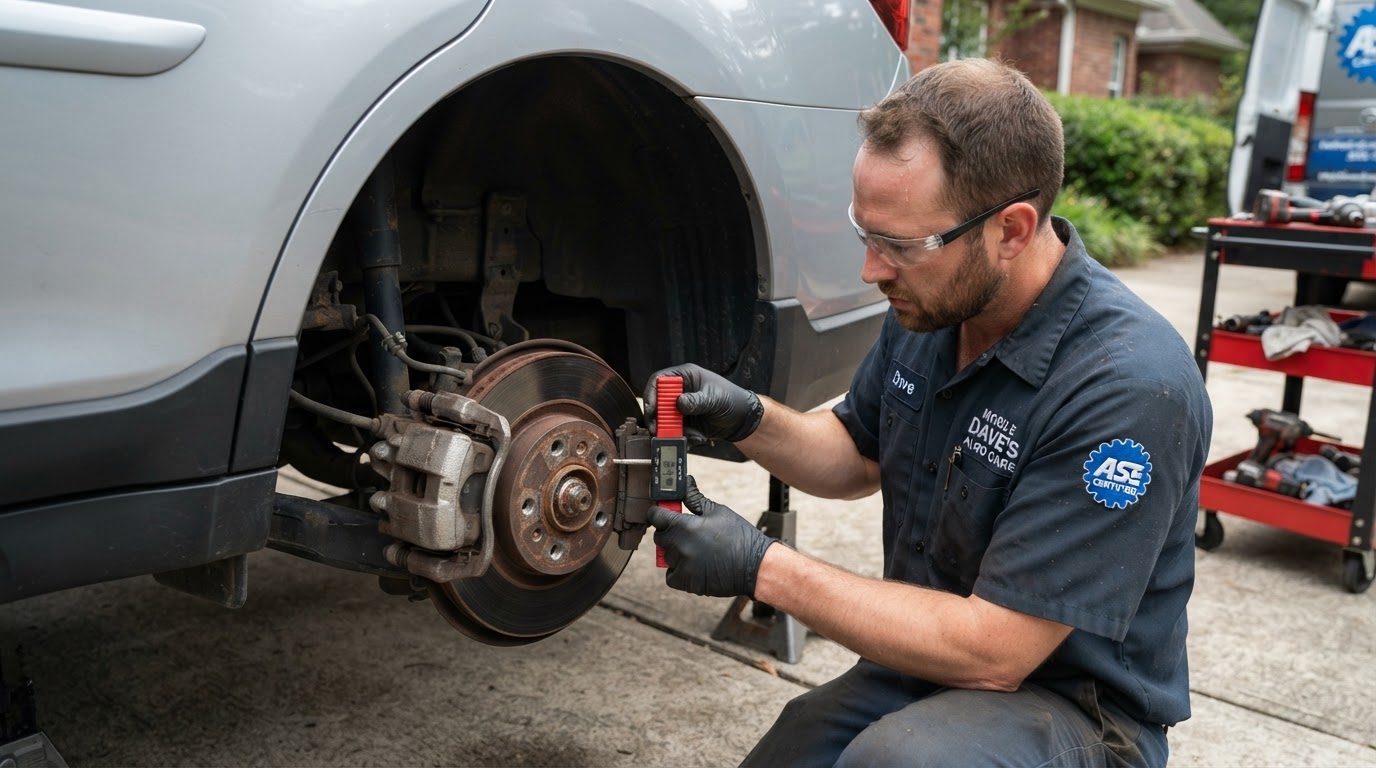
Brake pads create the friction that stops your vehicle, and they wear over time. We measure pad thickness, inspect rotor condition, lubricate caliper slides, service the hardware, and bed in the new pads — so your brakes are quiet, confident, and safe. We show you the wear before any work so you understand exactly what your brakes need.
What Brake Pads Do
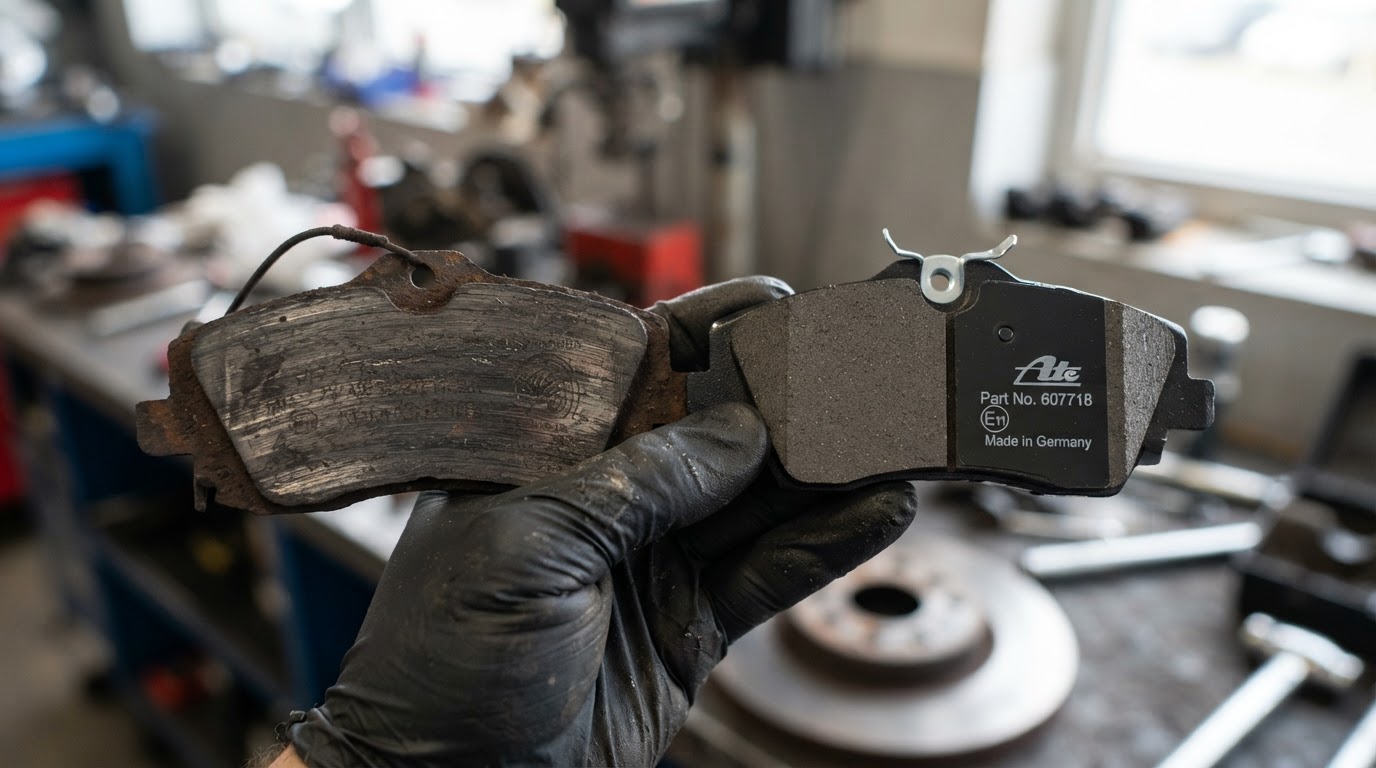
Brake pads are the friction material that presses against your rotors to slow and stop the vehicle. Every time you brake, a tiny amount of pad material wears away. Over tens of thousands of miles, that material is consumed — and when it's gone, the metal backing plate contacts the rotor, causing grinding and rotor damage.
Pads are a wear item by design. Replacing them at the right time — before they're gone — keeps your brakes safe, quiet, and affordable. Waiting until metal-on-metal contact turns a pad job into a pad-and-rotor job.
Signs You Need New Brake Pads
Your brakes usually tell you before they fail. Watch for these symptoms:
- Squealing or squeaking when braking — often a wear indicator
- Grinding noise — metal-on-metal contact, pads are gone
- Brake pedal feels soft, spongy, or sinks toward the floor
- Longer stopping distance than you're used to
- Steering wheel shimmies or pulses when braking
- Brake warning light or pad wear light on the dash
- It's been 30,000-50,000+ miles since your last pad replacement
Squealing vs. Grinding: What Each Means
Squealing usually means the pads are worn to the wear indicator — a small metal tab that contacts the rotor to warn you. It's a signal to replace the pads soon, before damage occurs. Squealing can also be caused by glazed pads, missing noise shims, or debris.
Grinding is more serious. It means the pad friction material is completely gone and the metal backing plate is cutting into the rotor. Grinding should be addressed immediately — every stop damages the rotor further and increases the repair cost. If you hear grinding, stop driving and call for service.
Do I Need Rotors Too?
We measure rotor thickness and lateral runout before recommending anything. If the rotors are above minimum spec and not warped, reuse or machining is often possible. If they're worn past safe limits, grooved, or warped, replacement is the safe choice.
We show you the measurements and explain the options — we don't replace rotors that don't need it, and we won't install new pads on rotors that are unsafe. Matching fresh pads to a good rotor surface is what gives you quiet, confident stops.
Ceramic vs. Semi-Metallic Pads
Brake pads come in different friction materials, each with trade-offs. Ceramic pads are quiet, produce low dust, and offer smooth braking — popular for daily drivers. Semi-metallic pads offer stronger bite and heat resistance — common for heavier vehicles and performance use.
We match the pad type to your vehicle and driving, not a one-size-fits-all package. We'll explain the options and recommend the right pad for how you use your vehicle.
What's Included in a Mobile Brake Pad Service
Our on-site brake pad service is complete. It includes:
- Measuring pad thickness and rotor condition
- Inspecting caliper slides and hardware
- Replacing pads with quality ceramic or semi-metallic sets
- Lubricating caliper slides and servicing hardware
- Cleaning the caliper bracket and rotor surface
- Bedding in the new pads for proper break-in
- Torquing wheels to spec and verifying pedal feel
When Not to Drive
If you hear grinding, the brake pedal goes to the floor, the red brake warning light is on, or the vehicle pulls hard to one side under braking, don't drive. These indicate a safety-critical failure that needs immediate attention.
Pull over safely and call for mobile service or a tow. Driving with compromised brakes risks your safety and causes further damage that increases the repair cost.
How Long Does Brake Pad Replacement Take?
A single axle (front or rear) typically takes 1 to 2 hours; both axles may take 2 to 3 hours. The time depends on the vehicle, caliper condition, and whether the rotors need machining or replacement alongside the pads. We give you a realistic time estimate before we begin.
If the pads and any needed rotors are available and you approve the work, we complete the service on the same visit — including the bed-in process and a final pedal check so your brakes are quiet and confident before you drive.
What Brake Pad Replacement Costs
Pricing varies with which axle is serviced (front, rear, or both), the pad type (ceramic, semi-metallic, or performance), whether the rotors can be machined or need replacement, and the condition of the hardware and caliper slides. A front pad replacement on a common sedan is a different scope from a full four-corner pad and rotor job on a heavier vehicle.
We inspect and measure first, then give you a written estimate covering only the parts and labor your vehicle actually needs. You approve the estimate before any work begins — no surprise charges and no unnecessary upsells.
How Long Do Brake Pads Last?
Front pads typically last 30,000 to 50,000 miles depending on driving habits, vehicle weight, and terrain. Rear pads last longer because the front brakes do most of the work — often 50,000 to 70,000 miles. Bloomington's mix of stop-and-go campus traffic and higher-speed rural highway miles affects pad life differently than pure city or pure highway driving.
Hard braking, towing, and driving in hilly terrain shorten pad life. We measure pad thickness at every visit and show you the wear, so you know exactly where your pads stand and when to plan for replacement — no guessing based on mileage alone.
Brake Pad Break-In: Why Bed-In Matters
New brake pads need a proper bed-in process to perform their best. Bed-in transfers a thin, even layer of pad material onto the rotor surface, which creates the friction interface that gives you smooth, quiet stops. Without proper bed-in, pads can glaze, squeal, or deliver uneven braking feel.
We perform a controlled bed-in after installation — a series of moderate stops from speed that build heat and transfer material evenly. We also verify pedal feel and confirm the brakes are quiet and confident before you drive. This step is often skipped, and it's the difference between brakes that feel right and brakes that squeal or pulse after a pad job.
Seasonal Brake Considerations for Indiana Drivers
Indiana's seasons affect brake wear and performance. Winter road salt and moisture accelerate corrosion on rotors, caliper slides, and hardware — a vehicle that sits through winter can develop surface rust on rotors that causes noise and uneven wear. Spring is when we often find seized caliper slides from winter corrosion, causing uneven pad wear or a pulling brake.
Bloomington's hilly terrain also means more brake use than flat areas — downhill stops generate heat that stresses pads and rotors. If your brakes are approaching the end of their service life heading into winter, proactive replacement prevents a safety issue when roads are slick. We inspect brake condition during any service visit and flag wear before it becomes a problem.
Choosing a Mobile Brake Service Provider
When choosing a brake service provider, look for one who measures before recommending — pad thickness and rotor condition should be checked and shown to you, not guessed. A provider who skips measurement may sell you pads or rotors you don't need, or install new pads on rotors that should have been machined or replaced.
Ask whether they service the caliper slides and hardware, not just swap pads — stuck slides cause uneven wear and premature failure. Confirm they perform a bed-in and verify pedal feel after installation. And verify they use quality pads matched to your vehicle, not the cheapest available. Brakes are your most important safety system — they deserve proper service, not a quick parts swap.
Who Needs This Service?
Bloomington drivers hearing squealing or squeaking when braking, grinding that means metal-on-metal contact, a soft or sinking brake pedal, longer stopping distances, or a steering wheel that shimmies when braking. If it's been 30,000+ miles since your last brake service, an inspection can catch wear before it becomes a safety issue.
Common Symptoms
If you're noticing any of these, it's time to call.
- Squealing or squeaking when braking
- Grinding noise = metal-on-metal contact
- Brake pedal feels soft or sinks
- Longer stopping distance
- Steering wheel shimmies when braking
What We Do
Our mobile mechanic handles this on-site in Bloomington.
- Inspect pad thickness and rotor condition
- Replace pads with quality ceramic or semi-metallic sets
- Lubricate slides and service hardware
- Bed-in pads and verify pedal feel
Mobile Brake Pad Replacement — On-Site in Bloomington
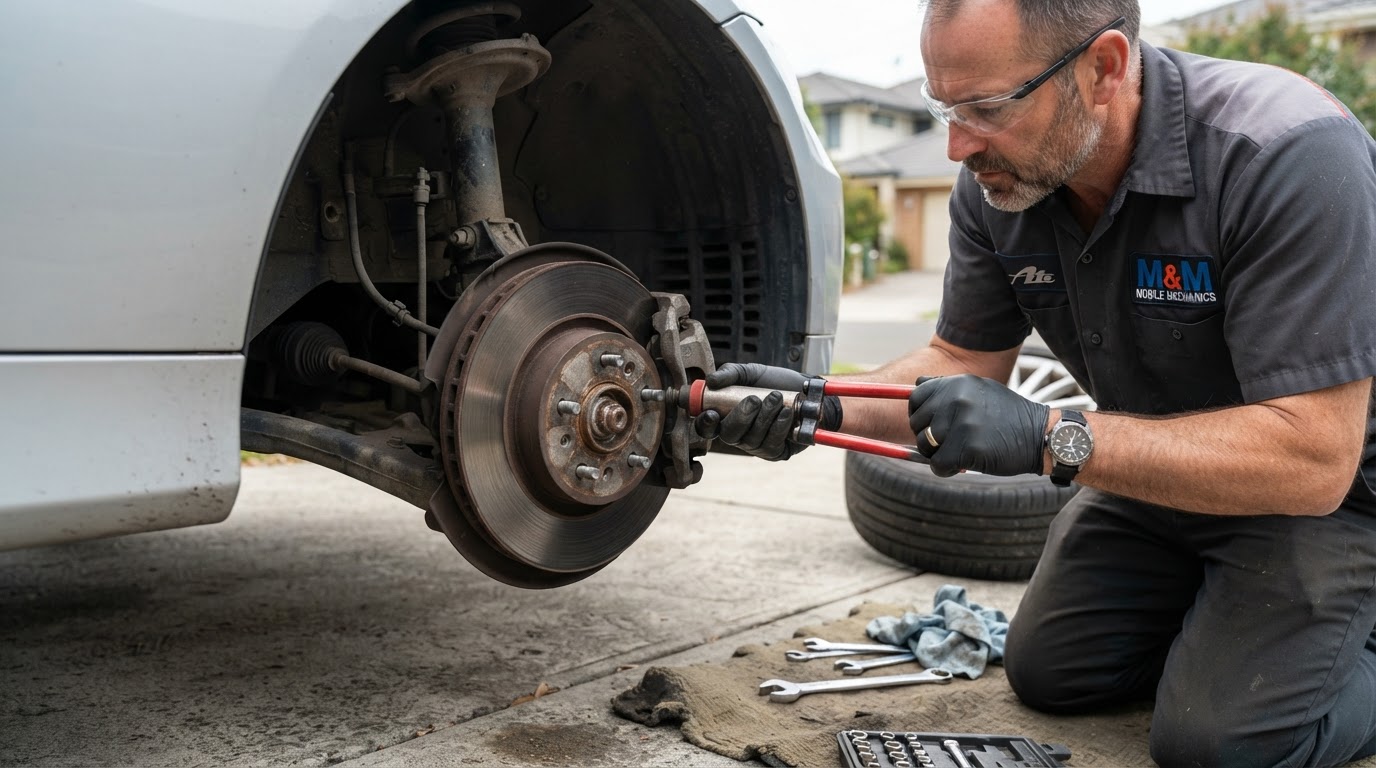
Real mobile service, performed where your vehicle sits.
How the Service Works
A clear, step-by-step process from arrival to a verified fix.
- 1
Inspect & Measure
We measure pad thickness, check rotor condition and runout, and inspect caliper slides and hardware — then show you the wear so you see exactly what's needed.
- 2
Replace Pads & Service Hardware
We install quality pads matched to your vehicle, lubricate slides, service or replace hardware, and clean the caliper bracket.
- 3
Bed-In & Verify
We bed in the new pads, torque wheels to spec, and verify pedal feel and quiet, confident stops before you drive.
Pricing Factors
Cost varies based on your vehicle and the specifics of the job. You approve a clear estimate before any work begins.
- Axle serviced (front, rear, or both)
- Pad type — ceramic, semi-metallic, or performance
- Whether rotors can be machined or need replacement
- Hardware and caliper slide condition
Mobile Service Suitability
Brake pad replacement is highly mobile-friendly. Most pad and rotor services are completed on-site at your home or office with the tools we bring. We can't machine rotors on the road, but we measure them and recommend honestly whether machining, reuse, or replacement is the right call.
Mobile Brake Pad Replacement — FAQs
Do I need rotors too?
We measure rotor thickness and runout. If they're within spec we reuse them; if not, we show you why before replacing.
How long do pads last?
Front pads typically last 30,000-50,000 miles depending on driving habits. We'll show you the wear at every visit.
Why are my new brakes squeaking?
New pads can squeak briefly during bed-in, but persistent squeak usually means glazed pads, missing shims, or stuck slides. We lubricate hardware to prevent it.
How long does a brake pad service take?
A single axle typically takes 1-2 hours; both axles may take 2-3 hours. We give you a realistic estimate up front.
Can you do brakes at my home or office?
Yes. We perform complete brake pad service at your location — inspection, replacement, hardware service, and a final pedal check.
What does grinding mean?
Grinding means the pad friction material is gone and metal is contacting the rotor. Stop driving and call for service — every stop damages the rotor further.