A pulsing pedal or steering shimmy often means warped rotors. Our mobile brake rotor replacement in Bloomington, Indiana measures, machines, or replaces your rotors at your location for smooth, confident stops.
Rotors provide the friction surface your pads clamp against. Heat cycling, hard stops, and uneven lug torque can warp them, causing pedal pulsation and steering shimmy. We measure thickness and lateral runout, machine rotors in-spec when possible, or replace them with quality units when they're worn past safe limits — always showing you the measurements first.
What Brake Rotors Do
Brake rotors (also called discs) are the metal surfaces the brake pads clamp against to stop the vehicle. The pads squeeze the rotor, creating friction that converts your vehicle's kinetic energy into heat. Every stop generates heat and wear on both the pads and the rotor surface.
Over time, that heat and wear take a toll. Rotors can warp, develop grooves, rust, or wear below their minimum safe thickness. When the rotor surface is no longer true and smooth, you feel it as pulsation, vibration, or reduced braking performance.
Why Rotors Warp
Rotors warp when they experience uneven heating and cooling. The most common causes are:
- Heat cycling — repeated hard stops that heat and cool the rotor unevenly
- Uneven lug torque — wheels tightened unevenly distort the rotor
- Hard stops from high speed — concentrated heat in one zone
- Stuck caliper or slide — one pad drags and overheats that rotor
- Rust and corrosion — pitting the friction surface over time
- Normal wear — the rotor surface wears thinner with use
Signs You Need Rotor Service
Warped or worn rotors produce distinct symptoms. Watch for:
- A brake pedal that pulses up and down when you brake
- A steering wheel that shakes or shimmies under braking
- Vibration that's worse at highway speeds
- Deep grooves or ridges you can feel on the rotor face
- A grinding or scraping sound even with good pads
- Longer stopping distance or reduced braking feel
Machine or Replace: How We Decide
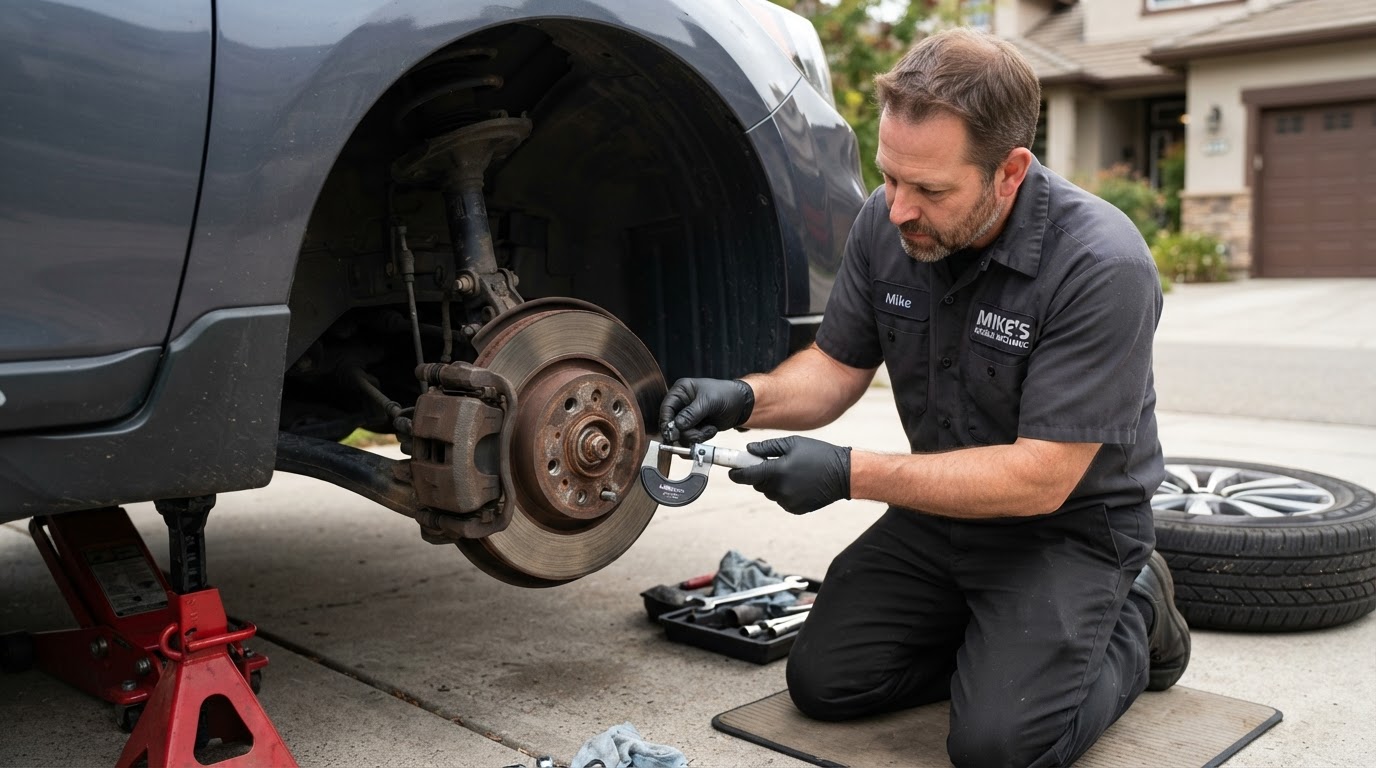
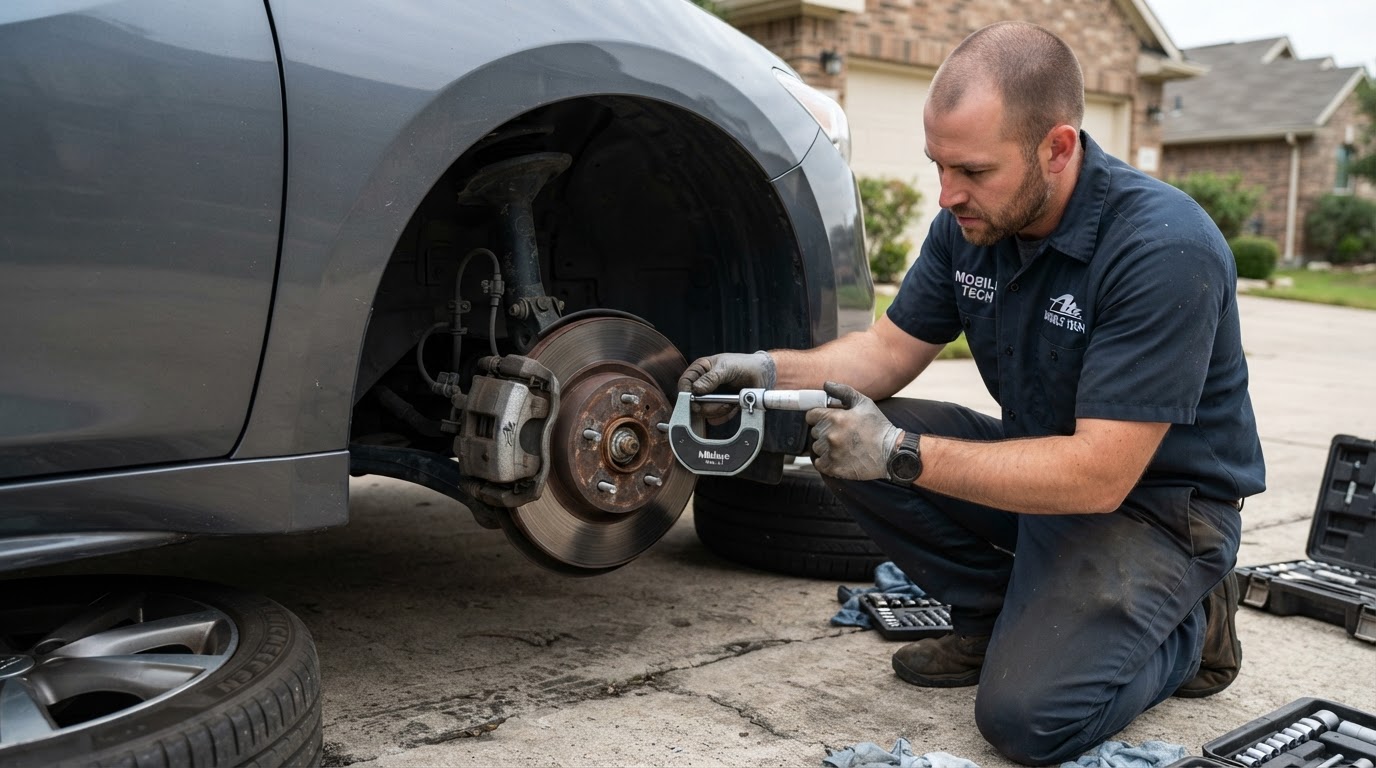
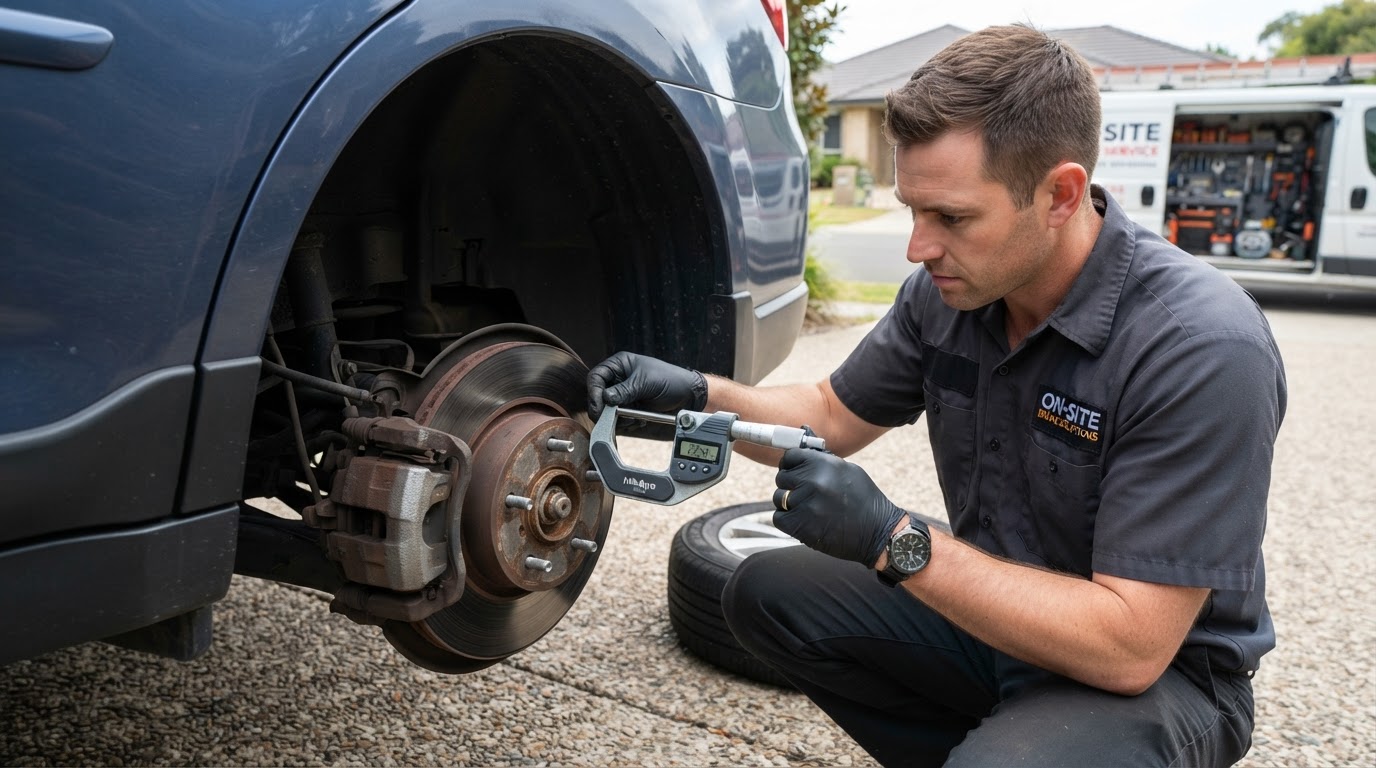
We measure rotor thickness with a micrometer and check lateral runout — the side-to-side wobble — before recommending anything. If the rotor is above its minimum thickness spec and not cracked, machining (resurfacing) restores a true, smooth surface at a lower cost.
If the rotor is at or below its discard thickness, cracked, or too grooved to machine, replacement is the safe choice. We show you the measurements and explain the options — we don't machine a rotor that's too thin, and we don't replace one that could be safely machined.
Should Pads Be Replaced With Rotors?
We recommend fresh pads to match a new or newly machined rotor surface. Installing old pads — which have worn to the shape of the old rotor — on a fresh surface causes uneven contact, noise, and reduced braking performance.
We show you your pad condition and recommend accordingly. If the pads are still good and the rotors are being machined, reuse may be fine. If the rotors are being replaced, fresh pads give you the best result.
Can Rotors Be Replaced at My Location?
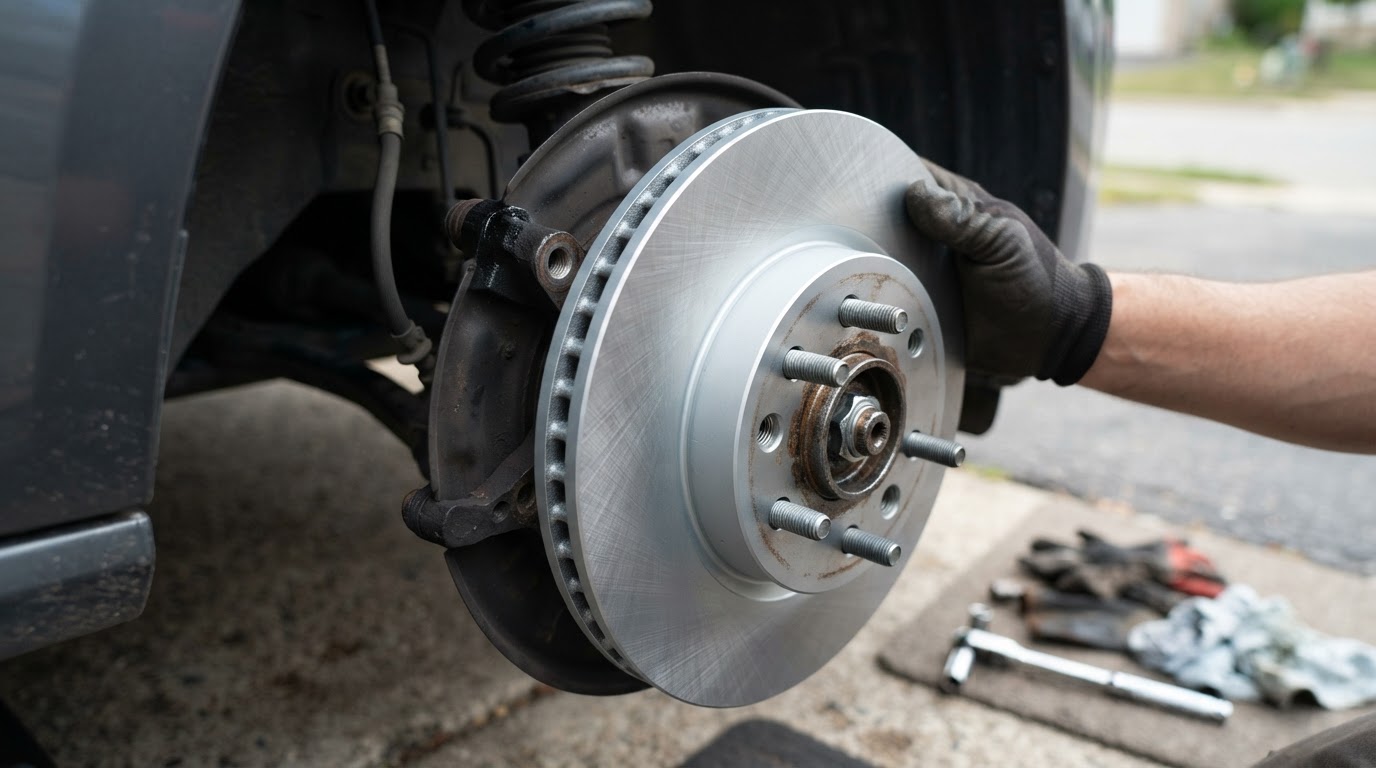
Rotor measurement and replacement are mobile-friendly. When rotors are past their minimum spec, we install quality replacement rotors at your location — we bring the tools and the parts.
We can't machine rotors on-site (that requires a lathe), so for rotors that could still be machined, we'll advise whether on-site replacement or a shop machining visit makes the most sense for your situation and budget.
Preventing Rotor Warping
A few habits help rotors last longer and stay true:
- Avoid hard stops from high speed when possible — let the vehicle coast down
- Don't hold the brake hard at a stop after a long downhill — the hot spot warps the rotor
- Ensure wheels are torqued evenly and in the correct sequence after any wheel service
- Address stuck calipers and dragging pads promptly — they overheat one rotor
- Replace pads before they're gone — metal-on-metal gouges the rotor
How Long Does Rotor Replacement Take?
A single axle (front or rear) typically takes 1.5 to 2.5 hours; both axles may take 3 to 4 hours. The time depends on the vehicle, caliper condition, and whether the rotors are bolt-on or integrated hub-style units that require additional disassembly. We give you a realistic time estimate before we begin.
If the rotors and matching pads are available and you approve the work, we complete the service on the same visit — including proper torque sequence and a final pedal check for smooth, pulse-free stops.
What Brake Rotor Replacement Costs
Pricing varies with the rotor diameter and vehicle application, whether machining is possible or replacement is required, which axles are serviced, and whether new pads are needed to match the new surface. Machining existing rotors is less expensive than replacement when the rotors are still above minimum thickness — but once they're at the discard spec, replacement is the only safe option.
We measure first and give you a written estimate covering the rotors, any pads needed, and the labor. You approve the estimate before any work begins. We show you the measurements so you understand exactly why machining or replacement is the right call for your vehicle.
Rotor Types: What's on Your Vehicle
Brake rotors come in several designs, and the type affects both cost and service. Solid rotors are common on rear brakes and lighter vehicles — simple, flat metal discs. Vented rotors have internal cooling fins between two friction surfaces and are used on front brakes and heavier vehicles where heat dissipation matters. Drilled and slotted rotors have holes or grooves cut into the friction surface for improved cooling and debris clearance — often found on performance vehicles.
Some vehicles use hub-style rotors where the rotor and wheel bearing are integrated — these are more complex and expensive to service because the bearing must be pressed or bolted. We identify your rotor type when we inspect and explain how it affects the service and estimate.
When to Replace vs. Machine Rotors
The decision to machine or replace comes down to the rotor's remaining thickness. Every rotor has a minimum thickness spec stamped into the casting — once the rotor wears to that discard thickness, it can't be machined safely because the metal is too thin to dissipate heat. Machining a rotor below spec causes warping, cracking, and brake failure.
We measure with a micrometer and check lateral runout before recommending anything. If the rotor is above minimum thickness and not cracked, machining restores a true surface at lower cost. If it's at or below the discard spec, cracked, or too deeply grooved, replacement is the safe choice. We show you the measurements and explain the options — we don't machine a rotor that's too thin, and we don't replace one that could be safely machined.
Seasonal Rotor Considerations for Indiana Drivers
Indiana winters are hard on rotors. Road salt and moisture cause surface rust that builds up on the rotor face when the vehicle sits — you'll feel it as a grinding noise and rough pedal for the first few stops after the car has been parked. While this surface rust often wears off with driving, repeated cycles of rust and braking eventually pit and degrade the rotor surface.
Summer heat from hard stops — especially on Bloomington's hilly terrain or during towing — creates hot spots that warp rotors. If you feel a pedal pulsation developing, early measurement and machining can often save the rotors before they're too far gone. We inspect rotor condition during any brake service and flag warping or wear before it becomes a safety issue.
Who Needs This Service?
Bloomington drivers feeling a brake pedal that pulses up and down, a steering wheel that shakes when braking, deep grooves or ridges on the rotor face, or vibration that's worse at highway speeds. If your rotors are below minimum thickness or have been machined already, replacement may be the safe choice.
Common Symptoms
If you're noticing any of these, it's time to call.
- Brake pedal pulses up and down
- Steering wheel shakes when braking
- Deep grooves or ridges on the rotor face
- Rotor below minimum thickness
- Vibration worse at highway speeds
What We Do
Our mobile mechanic handles this on-site in Bloomington.
- Measure rotor thickness and lateral runout
- Machine rotors in-spec or replace with quality units
- Install fresh pads to match the new surface
- Torque wheels and verify smooth stops
Mobile Brake Rotor Replacement — On-Site in Bloomington
Real mobile service, performed where your vehicle sits.
How the Service Works
A clear, step-by-step process from arrival to a verified fix.
- 1
Measure & Assess
We measure rotor thickness and lateral runout with a micrometer and check for heat cracks, scoring, and rust scale to determine if machining or replacement is correct.
- 2
Machine or Replace
If rotors are above minimum thickness, machining restores a true surface; if they're at or below the discard spec, we install quality replacement rotors.
- 3
Fresh Pads & Torque
We install fresh pads to match the new rotor surface, torque wheels to spec in the correct sequence, and verify smooth, pulse-free stops.
Pricing Factors
Cost varies based on your vehicle and the specifics of the job. You approve a clear estimate before any work begins.
- Rotor diameter and vehicle application
- Whether machining is possible or replacement is required
- Front, rear, or both axles
- Whether new pads are needed to match the new surface
Mobile Service Suitability
Rotor measurement and replacement are mobile-friendly. We can't machine rotors on-site, but when rotors are past their minimum spec we install quality replacements at your location. For rotors that can still be machined, we'll advise whether on-site replacement or a shop machining visit makes the most sense for your situation.
Mobile Brake Rotor Replacement — FAQs
Can rotors be machined instead of replaced?
If they're above minimum thickness and not cracked, machining is often the lower-cost option. We measure first and recommend honestly.
Why do rotors warp?
Heat cycling, uneven lug torque, and hard stops from high speed all contribute. Proper installation and torque help prevent recurrence.
Do you replace the pads with the rotors?
We recommend fresh pads to match a new rotor surface for even wear and quiet stops. We'll show you your pad condition and recommend accordingly.
Can you do rotors at my home?
Yes — most rotor replacements are completed on-site. We bring the tools and replacement rotors to your location.
My pedal pulses when I brake. Is that the rotors?
Pedal pulsation is a classic sign of warped rotors or uneven rotor thickness. We measure runout and thickness to confirm.
How long does a rotor replacement take?
A single axle typically takes 1.5-2.5 hours; both axles may take 3-4 hours. We give you a realistic estimate up front.